How Do Airports Make Money? (And Why They'd Love You to Arrive Early)
Airports earn about half their money from airlines, through charges for every passenger, landing and parked plane, and over a third from everything else, mostly car parks, shops, restaurants and rent. That second half depends on you having time to spare, which is why airports work so hard to get you through security quickly.
How airports make money: the short answer
- Airline charges: About 54% of airport revenue worldwide. Heathrow charged £50.21 per long-haul passenger in 2025.
- Everything else: About 37%. Car parks and shops are the two biggest earners.
- Parking beats shopping in the US: Parking and ground transport bring in about 8 times what US airport shops do.
- Your spare time is worth money: 10% longer at the airport means about 8% more food and drink sales, a 2024 study found.
- Fast security pays: Time spent queuing is time not spent shopping.
You’ve just paid £7 for a sandwich at the gate, and somewhere an accountant is smiling. But that sandwich is only half the story. The other half was paid by your airline before you even booked.
Here’s where an airport’s money actually comes from, with real numbers, and why the airport would quite like you to arrive with time to spare.
How do airports make money?
Short answer
Worldwide, about 54% of airport revenue comes from airlines (charges per passenger, per landing and for parking planes) and about 37% from commercial business: car parks, shops, restaurants, rents, car hire and advertising. That’s ACI World’s figure for 2024, from more than a thousand airports.
Airports earned US$194.9 billion in 2024, according to ACI World, the airports’ trade body. Planners split that into two buckets: aeronautical revenue, which is everything airlines pay to use the place, and non-aeronautical, which is everything else. That second bucket is worth more than you’d think: commercial income covers about 48% of airports’ total costs.
What airlines pay airports
Short answer
Airlines pay for every passenger they fly out, every landing and every hour a plane sits on a stand. At Heathrow in 2025, a long-haul departing passenger cost the airline £50.21 in passenger charges alone.
Heathrow publishes its charges, so it makes a good example. In 2025 an airline paid:
| What | Heathrow’s 2025 charge |
|---|---|
| Each departing domestic passenger | £14.31 |
| Each departing European passenger | £21.81 |
| Each departing long-haul passenger | £50.21 |
| A daytime landing (aircraft over 16 tonnes) | From £705.68 for the quietest aircraft up to £14,113.50 for the noisiest |
| Parking a narrowbody, after the free time | £48.87 per 15 minutes |
Notice the landing charge: it goes up with noise, not weight, so the noisiest aircraft cost by far the most to land. And it’s not a free market. At Heathrow, the UK Civil Aviation Authority caps the average charge per passenger for five years at a time; for 2025 and 2026 the cap works out at about £23.7 per passenger.
Car parks, shops and rent
Short answer
Worldwide, car parking is the biggest commercial earner (24% of non-airline revenue), just ahead of shops (23%), then property and rents (16%) and food and drink (6%).
Here’s how the commercial side breaks down globally, per ACI World:
| Commercial revenue | Share |
|---|---|
| Car parking | 24.1% |
| Retail concessions (shops and duty free) | 23.1% |
| Property and real estate | 15.8% |
| Food and beverage | 6.3% |
| Everything else (car hire, advertising, services) | The rest |
That works out at about US$7.57 of commercial revenue for every passenger. The mix depends hugely on where you are: in Asia, the Middle East and Africa, shops are the biggest commercial earner at 38.8%, while in North America parking takes 43.2%.
Heathrow shows what that looks like at one airport. Of its £3.5 billion revenue in 2025, about two-thirds came from airline charges, and £791 million came from what it calls retail, which includes shops, food, car parks and travel services. That’s about £9.36 for every one of its 84.5 million passengers.
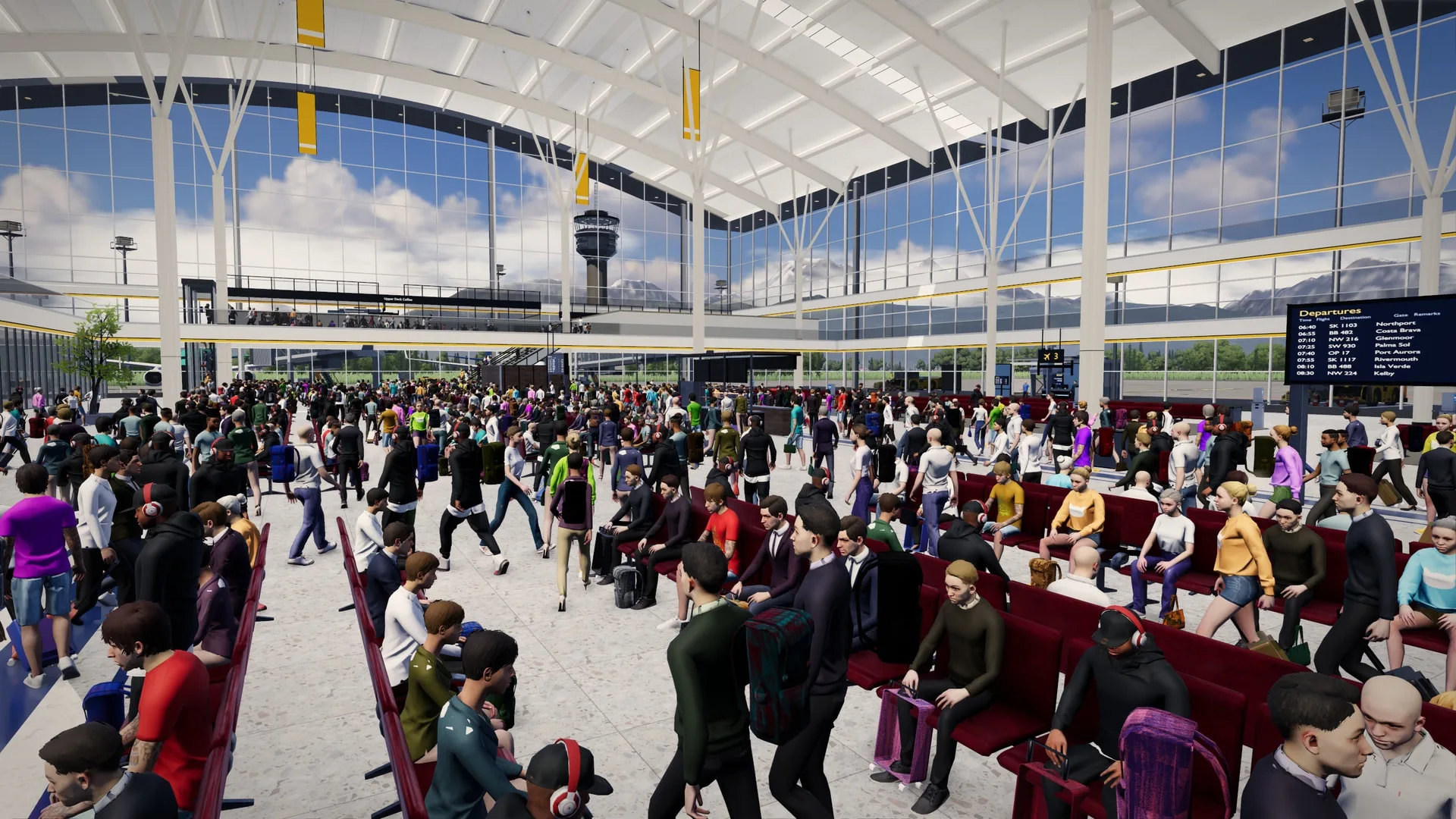
Why parking is king in America
Americans drive to the airport, and it shows. Across all US airports, parking and ground transport bring in about $6 billion a year, nearly half of all non-airline revenue and about eight times what the shops earn.
Tampa is a good example, from its own filing to the FAA for 2024. Of its $372.8 million operating revenue, parking and ground transport brought in $113.6 million, nearly a third of everything. Retail and duty free brought in $11.8 million. The car park earned almost ten times what the shops did.
Why airports want you early
Short answer
Because time at the airport turns into spending. A 2024 study of 89 US airports found that when passengers spend 10% longer at the airport, food and drink revenue rises about 8% and retail about 6%.
The study, published in the Journal of Air Transport Management, used phone location data to measure how long people actually stayed (about 80 minutes on average in 2019) and matched it against each airport’s revenue. More time meant more coffee and more shopping. Interestingly, the effect on food and drink was about twice as strong at airports with a single linear terminal as at airports with piers, and it disappeared at airports with midfield concourses. The layout matters. (Here’s how terminal layouts work.)
To be fair, the evidence isn’t all one way. Earlier studies found only a weak link between waiting time and spending, and some suggest passengers arrive with a set budget no matter how long they wait. But the airports themselves behave as if the link is real, and so does ACI World, which says a 1% rise in passenger satisfaction brings about a 1.5% rise in commercial revenue.
Why fast security is good business
Every minute in a security queue is a minute not spent in a café. That’s why airports chase fast security.
- Sydney Airport said of its 2023 improvements that the extra time “allowed passengers to make their way through security earlier, and shop and relax”. By December, 100% of domestic passengers were through security in under 10 minutes.
- Heathrow reports that 97.3% of passengers waited less than five minutes for security in 2025, and has committed to keeping 95% of passengers to five minutes or less from 2027.
You’ll often read that “ten extra minutes in a security queue cuts spending by 30%”. It’s a popular number, but I couldn’t trace it to any published study, so treat it as folklore. What is solid is the pattern: calm, early passengers spend, and stressed ones head straight for the gate.
Why you have to walk through duty free
Because it works. In 2008 Glasgow Airport routed every departing passenger through a single walk-through duty free store. Its general manager put it simply: “Every single passenger who departs Glasgow Airport now has the experience of World Duty Free… Our sales have grown +60% year-on-year.”
Airports have been copying the idea ever since. Seattle-Tacoma is planning an “immersive, walk-through retail experience” for 2028, explicitly “to help generate additional non-aeronautical revenue”.
What happens when nobody flies
The pandemic showed how much of this depends on you being there. In 2020, as passenger numbers fell by 61%, airport retail income fell by 65%, the hardest-hit category of all, according to ACI World. Car parks and shops need people; an empty airport earns almost nothing but rent.
The airport’s dilemma, in a game
All of this comes down to one trade-off that every airport manager knows: get passengers through quickly enough that they’re relaxed and early, and they’ll spend. Get it wrong, and they spend their spare time in a queue instead.
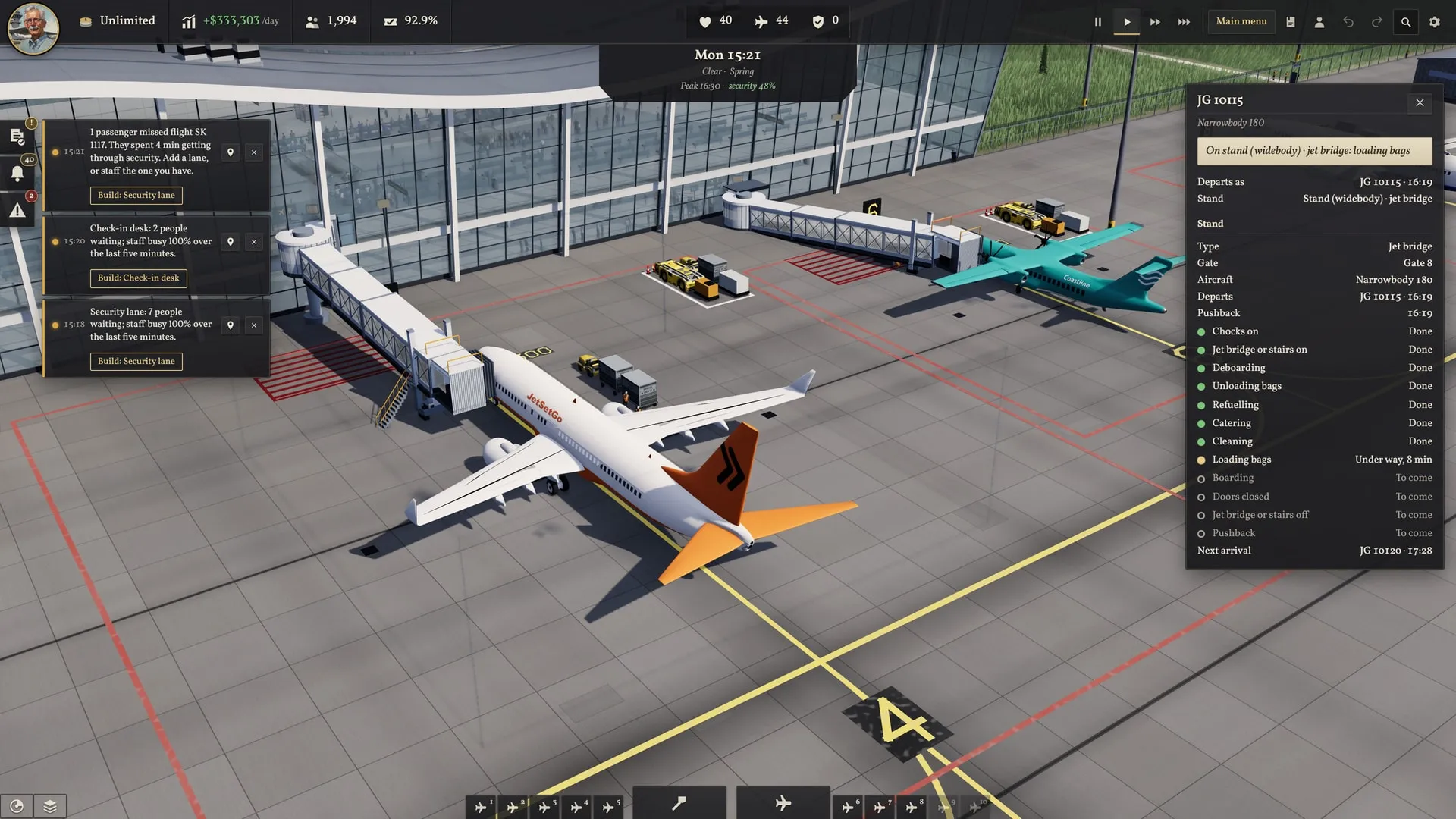
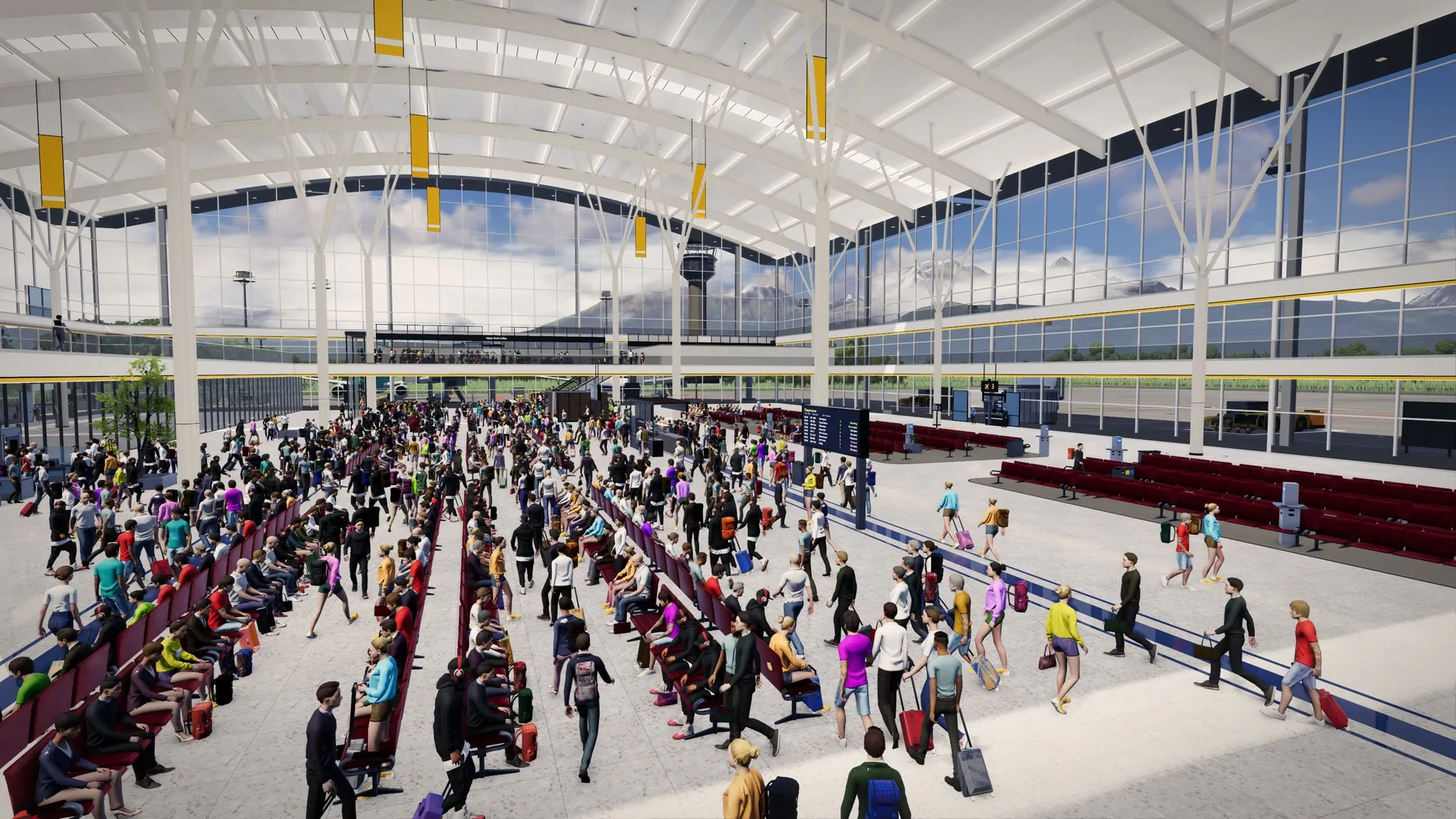
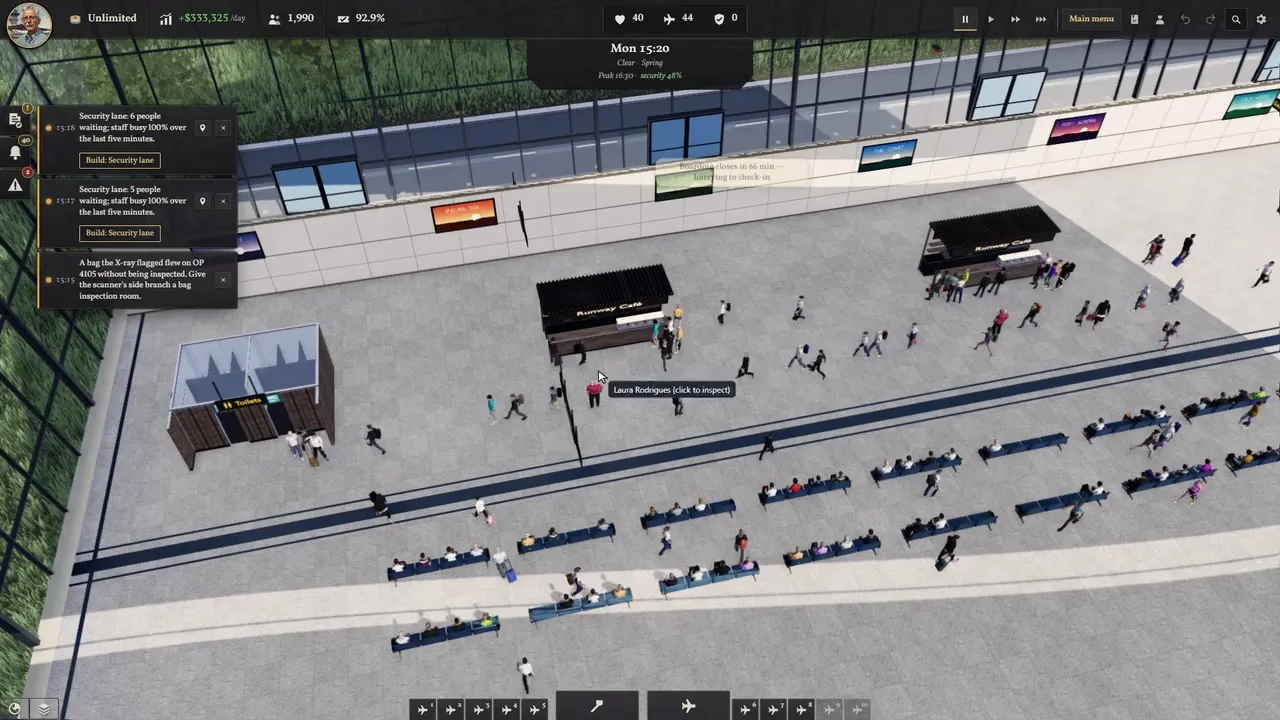
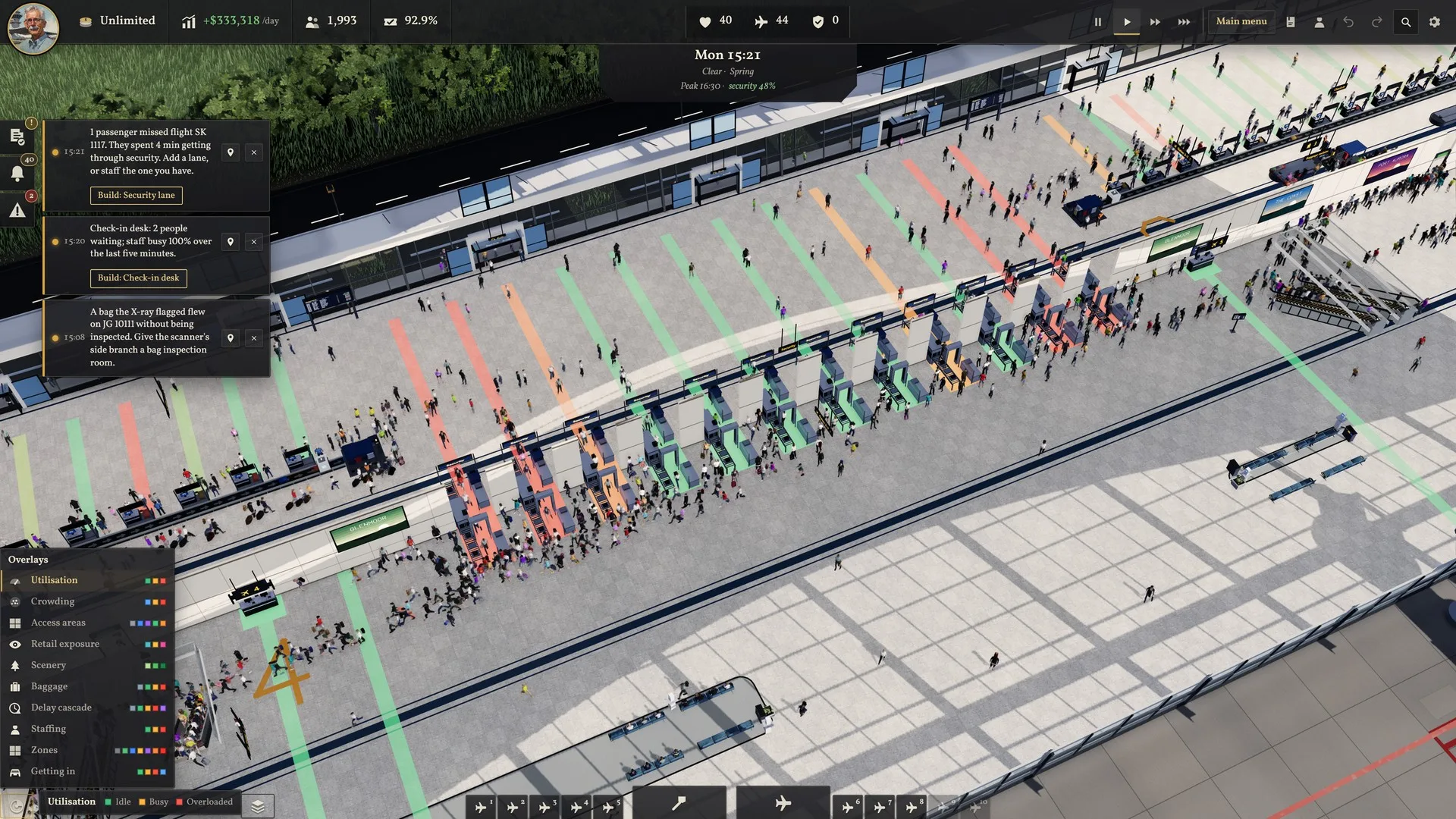
That trade-off is the heart of our game, Jetbridge. Build a smooth airport and your passengers wander, browse and buy a coffee before their flight. Squeeze the security hall and the cafés go quiet. Every queue you fix is money in the till.
Frequently asked questions
How do airports make money?
From two sources. About 54% comes from airlines, which pay charges for every passenger, landing and parked aircraft. About 37% comes from commercial activity, mainly car parking, shops and duty free, restaurants and cafés, property rents, car hire and advertising (ACI World, 2024 data).
What percentage of airport revenue comes from shops?
Worldwide, retail concessions are about 23% of airports' non-airline revenue, so roughly 8 to 9% of all airport revenue. It varies a lot by region; in Asia, the Middle East and Africa retail is the biggest commercial earner, while in North America it's small.
Do airports make more money from parking or shops?
Worldwide it's close, with car parking at 24% of non-airline revenue and retail at 23%. In the US, parking wins easily; parking and ground transport bring in nearly half of US airports' non-airline revenue, about eight times what the shops earn.
How much does an airline pay an airport per passenger?
It depends on the airport. At Heathrow in 2025, an airline paid £14.31 for each domestic departing passenger, £21.81 for European and £50.21 for long-haul, plus landing charges based on how noisy the aircraft is.
Why do airports want you to arrive early?
Partly to make sure you catch your flight, and partly because time is money. A 2024 study of 89 US airports found that a 10% longer stay is linked to about 8% more food and drink revenue and 6% more retail revenue.
Why do you have to walk through duty free?
Because the shop makes more money when everyone passes through it. When Glasgow Airport routed every departing passenger through a walk-through duty free store in 2008, its manager reported sales up 60% year on year.
Do faster security lines make airports more money?
Airports clearly think so. Sydney Airport says faster screening meant passengers could "shop and relax", and Heathrow commits to 95% of passengers queuing five minutes or less. No study has directly measured the effect yet, but longer time after security is linked to higher spending.
Who decides how much airports charge airlines?
At big airports, often a regulator. In the UK, the Civil Aviation Authority sets a cap on Heathrow's charges per passenger for five years at a time; it's about £23.7 per passenger on average for 2025 and 2026.
Sources
Prices, release dates and review counts were checked on Nov 27, 2026. They change, and we update this page when they do.
- Policymakers must support airport investment as global air travel demand rises, ACI World
- Airport non-aeronautical revenues and commercial strategy, ACI World blog
- Heathrow Airport Limited Annual Report and Financial Statements 2025, Heathrow Airport
- Heathrow Airport Limited, Conditions of Use from 1 January 2025, Heathrow Airport
- Regulator decides on changes to Heathrow's airline charges, UK Civil Aviation Authority
- Tampa International Airport, FY2024 FAA CATS Report 127, Hillsborough County Aviation Authority
- ACI-NA Concession Benchmarking Survey, Airports Council International North America
- Shopping or dining? On passenger dwell time and non-aeronautical revenues, Wu, Morlotti and Mantin, Journal of Air Transport Management (2024)
- Sydney Airport Annual Report 2023, Sydney Airport
- Walkthrough duty free store captures both spend and imagination as Glasgow Airport goes for growth, The Moodie Davitt Report
- SEA duty free, Port of Seattle
- Latest ACI data on airports' financial health during the first year of the pandemic, ACI World

I fly into a lot of airports. Most of them make me late, and I take it personally. I like a stand that's free when I land, a jet bridge that reaches the door first time, and good coffee. I don't like taxiing for twenty minutes to a remote stand and watching my passengers get on a bus.