Airport Terminal Layouts Explained: Linear, Pier, Satellite and Why Your Gate Is So Far Away
Airports arrange their gates in a handful of ways. Planes park along the front of one long building (linear), along fingers reaching out from it (pier), at separate buildings you reach by train or tunnel (satellite), or out on the apron with a bus (transporter). Most big airports mix them. Each layout is a trade between how many planes fit and how far you walk.
Airport terminal layouts: the short answer
- Linear: One long building, planes along its front. Short walks, until it gets too long.
- Pier: Fingers off a main hall. Lots of gates in little space, longer walks.
- Satellite: Gate buildings on their own, joined by a train or tunnel. Built for huge hubs.
- Transporter: No gates at the building; a bus or mobile lounge takes you to the plane.
- Walking distance: IATA's guidance is about 300 metres before you need moving walkways.
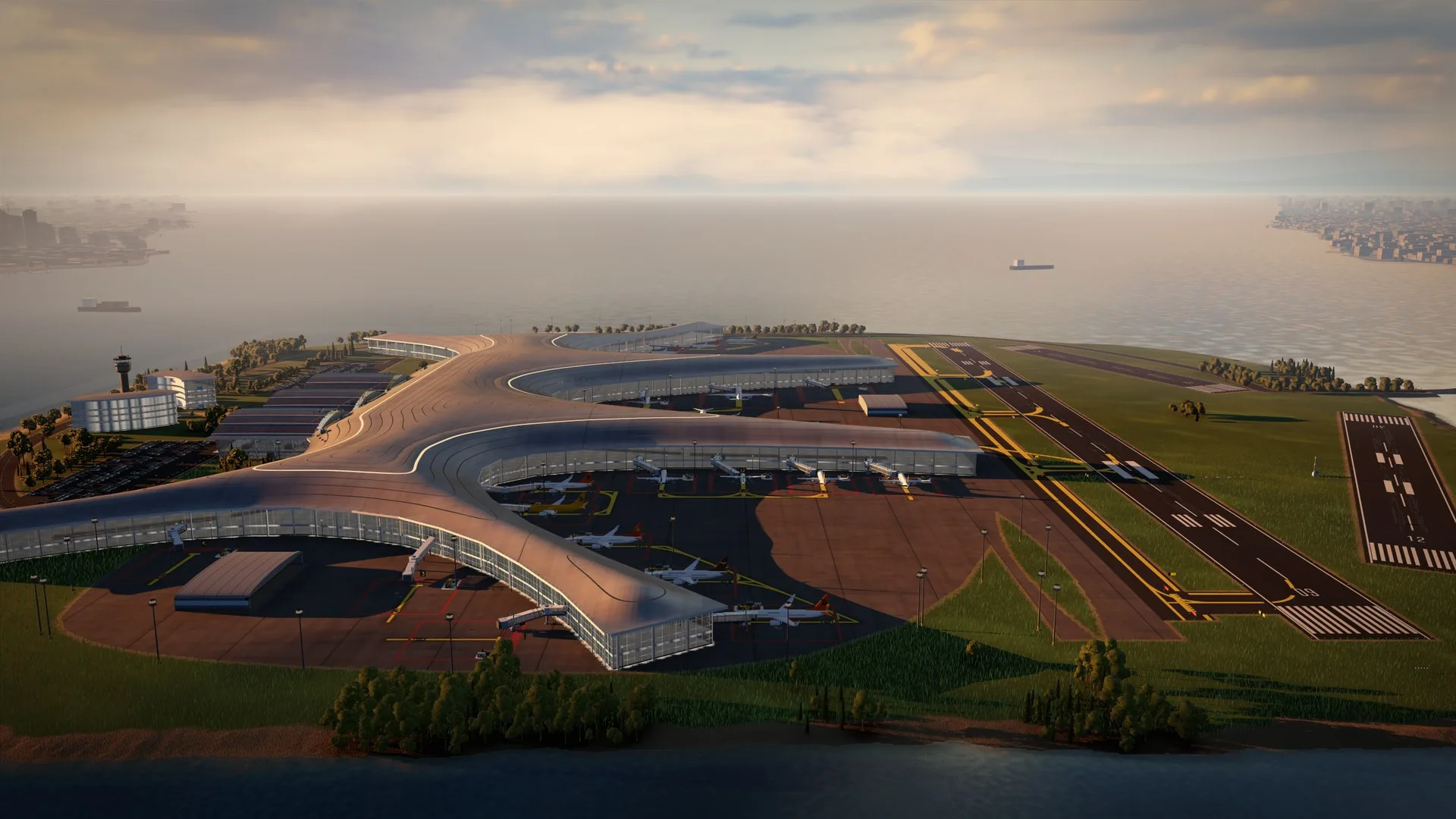
Every passenger has had the walk. You clear security, look at the board, and your gate is B57. You pass B12, B30, a moving walkway that’s broken, a coffee shop you’ll regret skipping, and arrive at B57 to find it’s a staircase down to a bus.
That walk isn’t bad luck. Somebody decided it when they drew the terminal. Here are the shapes airports come in, and what each one does to your morning.
What are the types of airport terminal layout?
Short answer
There are four basic layouts: linear, pier, satellite and transporter (remote). Most big airports mix them, which planners call a hybrid.
The FAA’s terminal planning manual sorts them by one question: where do the planes park, relative to the building? Along its front, along fingers coming off it, at separate buildings, or nowhere near it at all. Everything else, from how far you walk to how many shops you pass, follows from that.
| Layout | Where planes park | The good | The catch | Real examples |
|---|---|---|---|---|
| Linear | Along the front of one long building | Short walk from kerb to gate; easy to extend at the ends | It only gets longer, and so do the walks | San Jose, Dallas/Fort Worth |
| Pier (finger) | Along fingers reaching out from the main hall | Lots of gates in little space | Longer walks; everyone shares the corridor | LaGuardia, Reagan National, Miami, Phoenix |
| Satellite | At separate gate buildings, reached by train or tunnel | Huge capacity; great for connecting flights | Expensive links; harder to find your way | Atlanta, Denver, Heathrow T5, Tampa |
| Transporter | Out on the apron; a bus or mobile lounge takes you | Cheapest way to add a gate | Slower, and you meet the weather | Washington Dulles (originally) |
Linear terminals
Short answer
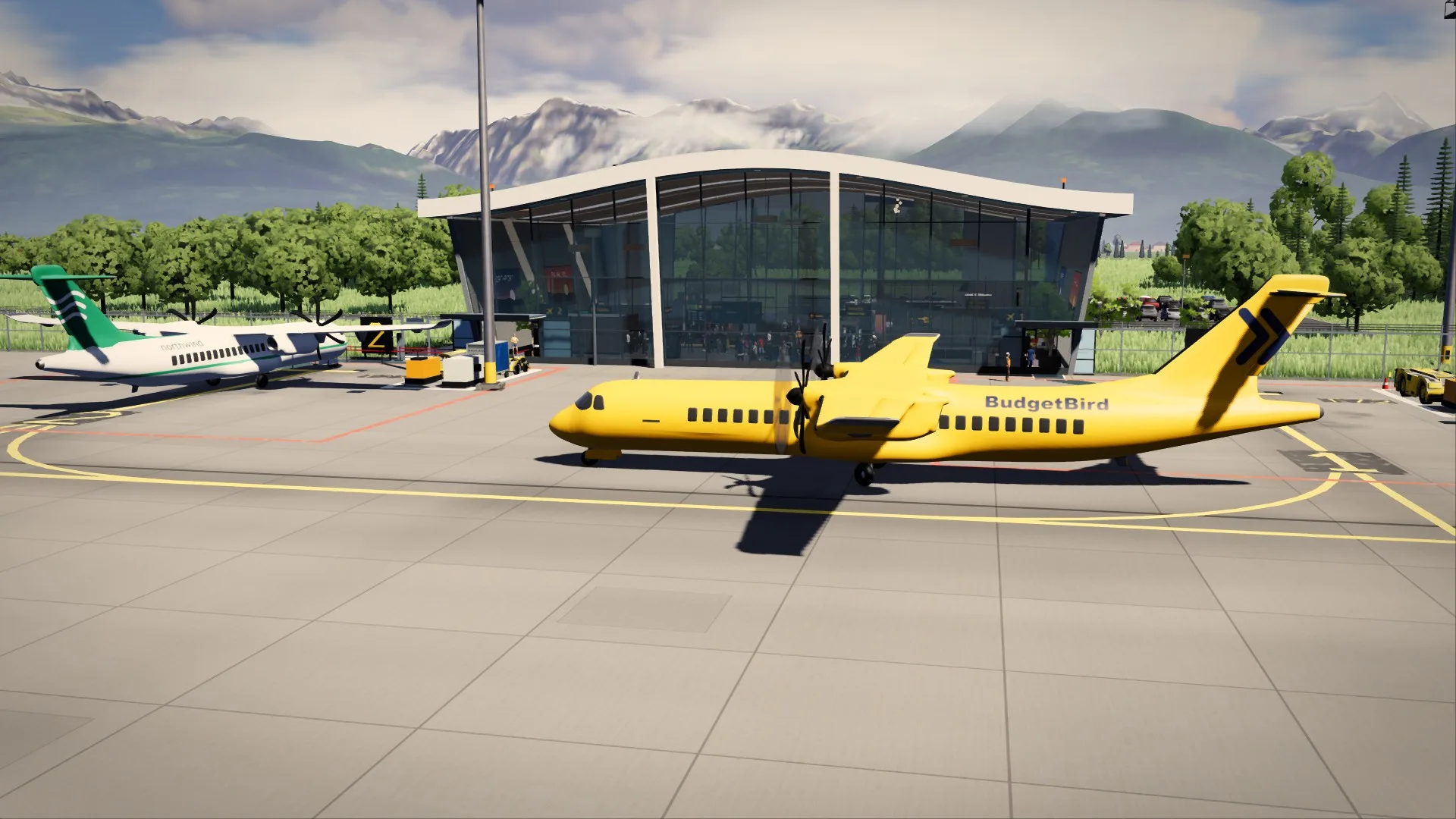
In a linear terminal the planes park in a row along the front of one long building. You walk in, through security and straight out to your gate. It’s the quickest layout for passengers, as long as the building stays small.
Linear is how most airports start, and it’s lovely when it’s small: kerb, check-in, security, gate, plane, all in a straight line. The FAA calls it ideal for smaller airports where most passengers start or end their journey there. San Jose and Dallas/Fort Worth are its examples.
The problem is growth. Every new gate adds length, and every metre of length is walking. Kansas City found out the hard way: its 1972 terminals were horseshoes about 2,200 feet long and only 72 feet deep. When security moved to the middle, there was no room left for anything else. In February 2023 Kansas City replaced them with a single new terminal with 39 gates.
Pier terminals
Short answer
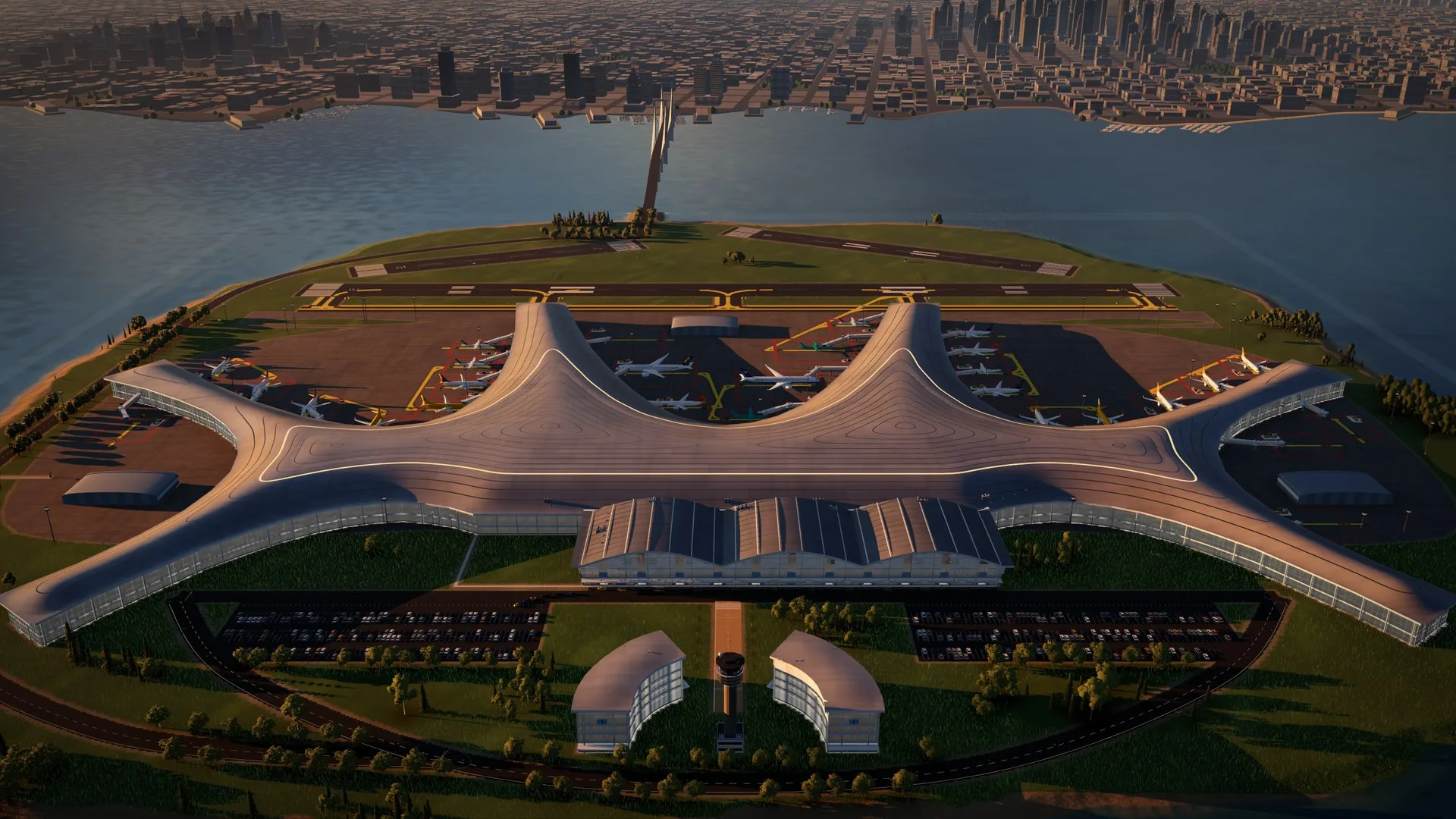
A pier (or finger) terminal has long concourses reaching out from the main hall, with planes parked along both sides. It packs in a lot of gates, at the cost of longer walks.
When an airport runs out of front, it grows fingers. Each pier is a long corridor with gates down both sides, so one building suddenly has several times the wall to park planes against. The FAA lists LaGuardia, Reagan National, Miami, Houston and Phoenix among its examples.
The catch is the corridor. Arriving and departing passengers share it, the gate at the far end can be a long way from the entrance, and the busiest piers turn into a slow river of rolling suitcases at 7 a.m.
Satellite terminals
Short answer
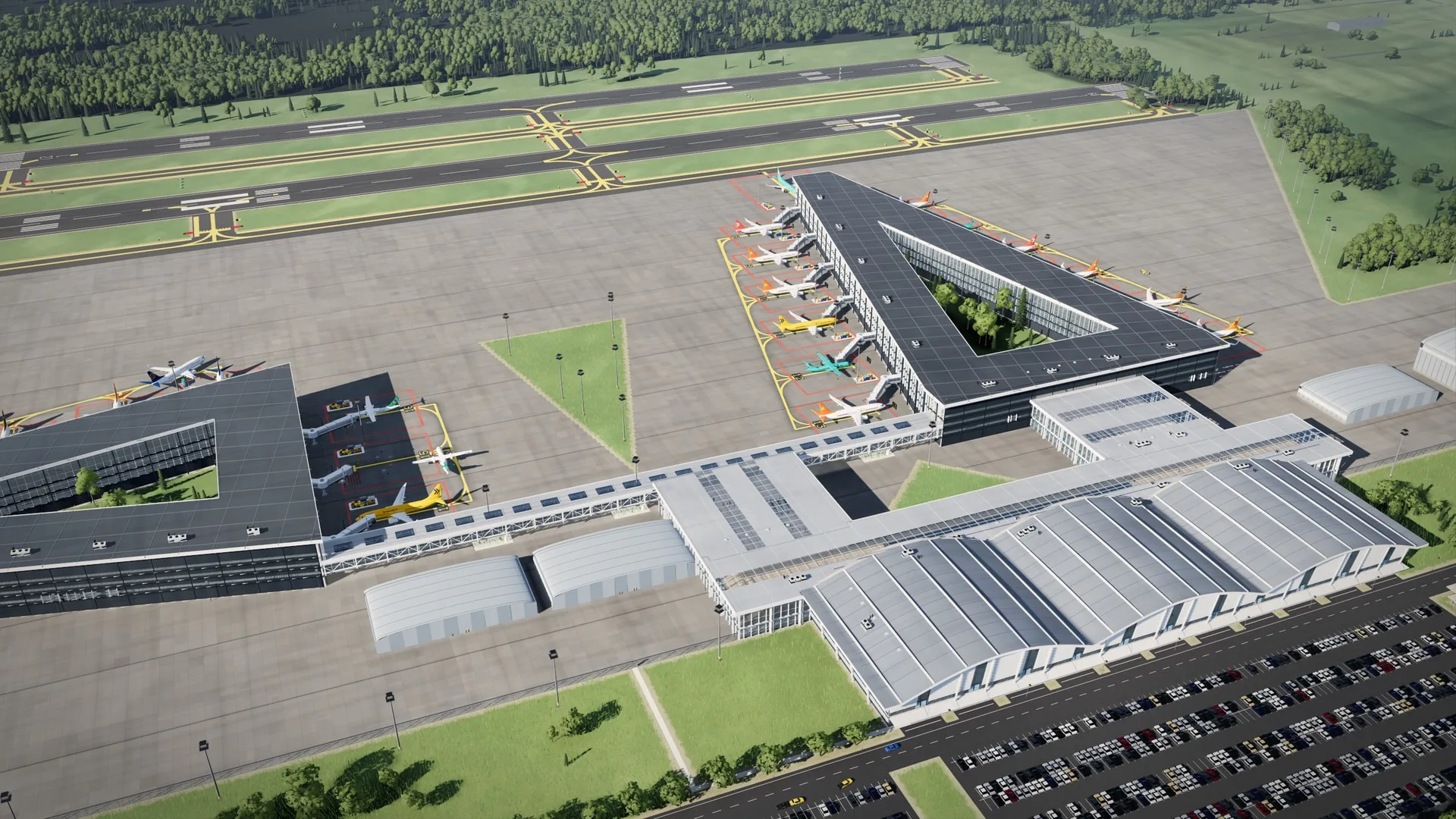
A satellite is a gate building standing on its own on the airfield, reached by a tunnel, a bridge or a driverless train. Planes can park all the way around it, which is why the world’s biggest hubs use them.
Take the gates away from the main building altogether, and planes can park all the way round them. Tampa got there early: when its terminal opened in 1971, it linked the main building to its airside gate buildings with what the airport calls the world’s first automated people movers. The whole idea was short walks.
Today the FAA lists Atlanta, Denver, Miami, Orlando, Pittsburgh, Seattle, Tampa and Washington Dulles as airports whose concourses are reached by people movers. Heathrow’s Terminal 5, opened in 2008, has a main building and two satellites joined by a driverless train, and Munich’s Terminal 2 satellite, opened in 2016, is about a minute away by its own automated metro.
The FAA is honest about the downsides: changing planes between two satellites is slow, every satellite needs its own toilets, shops and staff, and they make for “less intuitive wayfinding”. And the tunnels under the apron cost a fortune.
Transporter and remote stands
Short answer
In a transporter layout the planes don’t park at the building at all. A bus, or originally a “mobile lounge”, drives passengers out to the aircraft.
Washington Dulles took this further than anyone. When it opened in 1962, there were no gates on the airfield at all: mobile lounges, rooms on wheels for up to 102 passengers, drove from the terminal straight to the plane, and passengers walked less than 200 feet inside the terminal. As the airport grew, it built midfield concourses, and the lounges became shuttles to them.
Pure transporter airports are rare now, but every big airport keeps some remote stands for busy hours. The FAA notes the remote layout is common in Europe and South America and uncommon in the US. Why some flights get a bus instead of a jet bridge has the details.
Hybrid terminals: what most airports really are
Airports grow in stages, and each stage gets whatever shape made sense at the time. So most large airports are a mix: a linear front, a few piers, perhaps a satellite, and remote stands for the morning rush. The FAA notes that many existing and planned terminals use this hybrid approach.
That’s why some airports feel like a puzzle box. They’re several eras of airport bolted together.
Which layout has the shortest walk?
Short answer
A small linear terminal. Once airports grow, IATA’s guidance is to keep walks between gates to about 300 metres without help, add moving walkways up to roughly 650 metres, and use trains or buses beyond that.
Those figures come from IATA’s airport design manual, as summarised by the US National Academies: about 300 metres (985 feet) is the longest unaided walk between gates, rising to about 650 metres (2,133 feet) with moving walkways. That’s roughly a five-minute walk before the walkways start. IATA’s own design guidance says the same: walks over 300 metres “should be augmented with moving walkways”.
Every layout above is a different answer to the same problem: more gates mean more walking, and at some point you need a train.
Why the layout decides where the shops go
There’s one more thing the layout decides, and airports care about it a lot: what you walk past. IATA’s guidance puts it neatly: shops should be “on the way not in the way”. The best airports put the shops between security and the gates, on the route everyone takes, with enough space that nobody has to fight a queue to reach them.
Get it wrong and you get either a deserted shopping street nobody walks down, or a corridor so jammed that people can’t stop even if they want a coffee. And that matters, because airports make a lot of their money from those shops.
Design your own
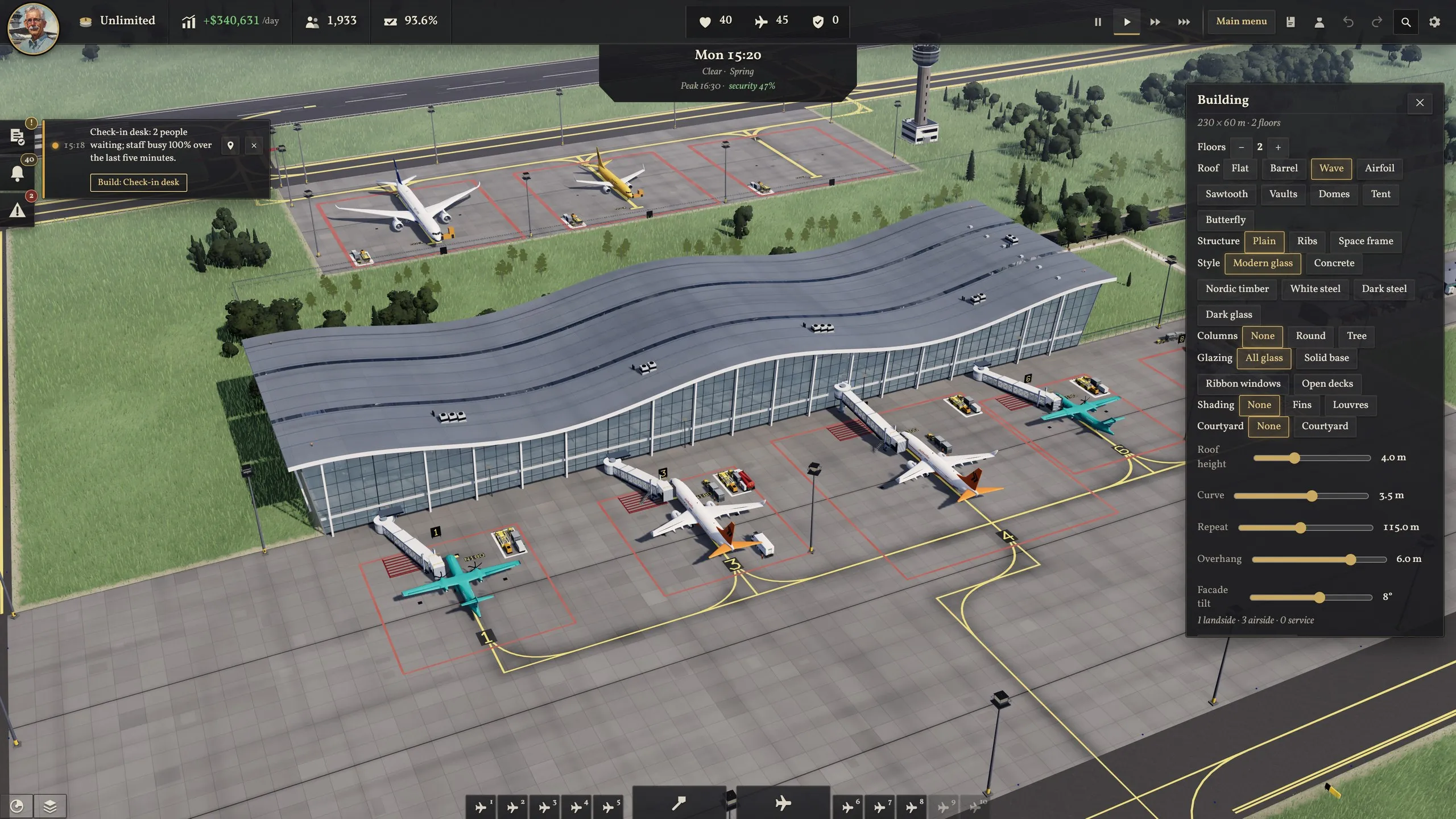
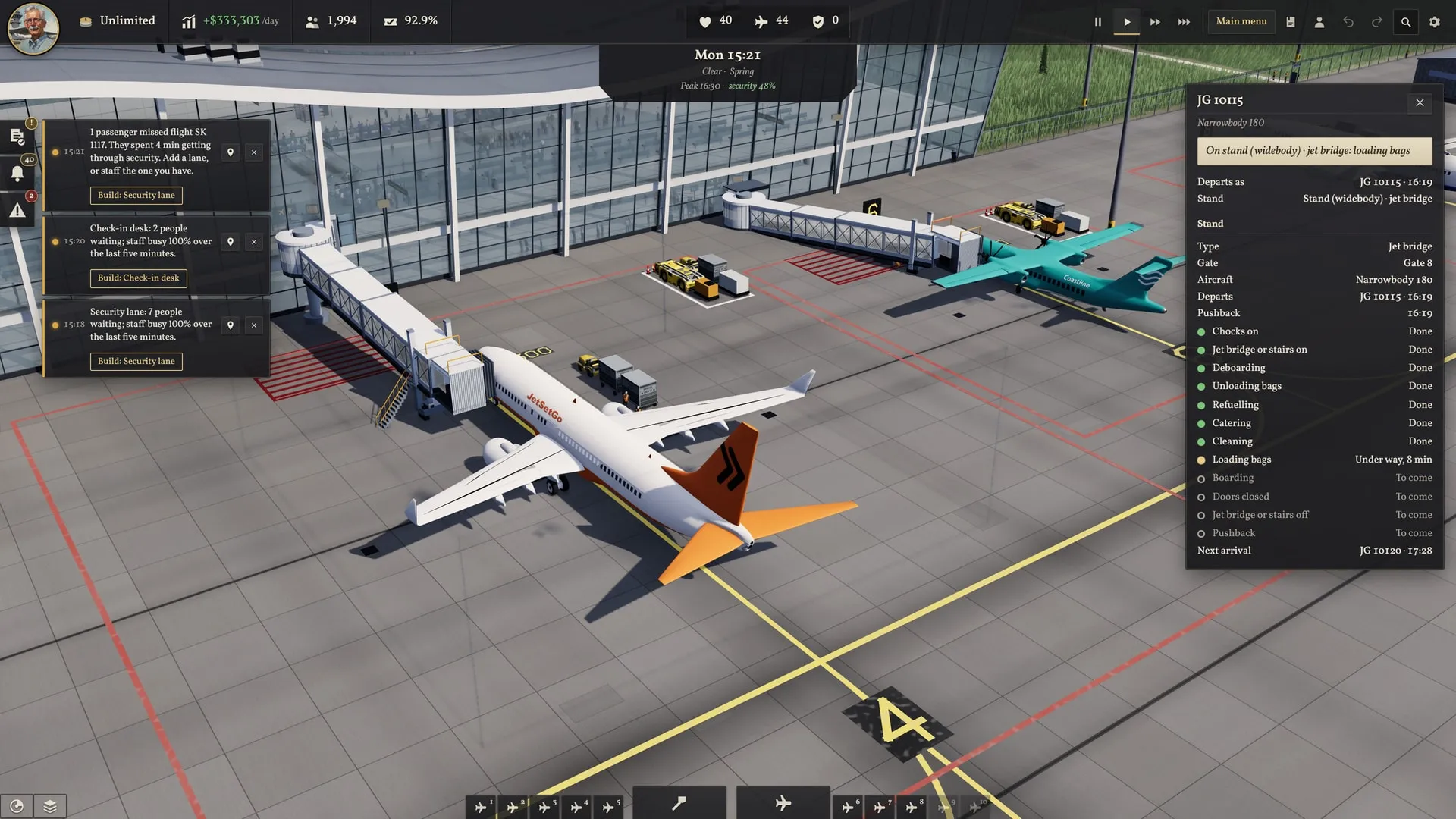
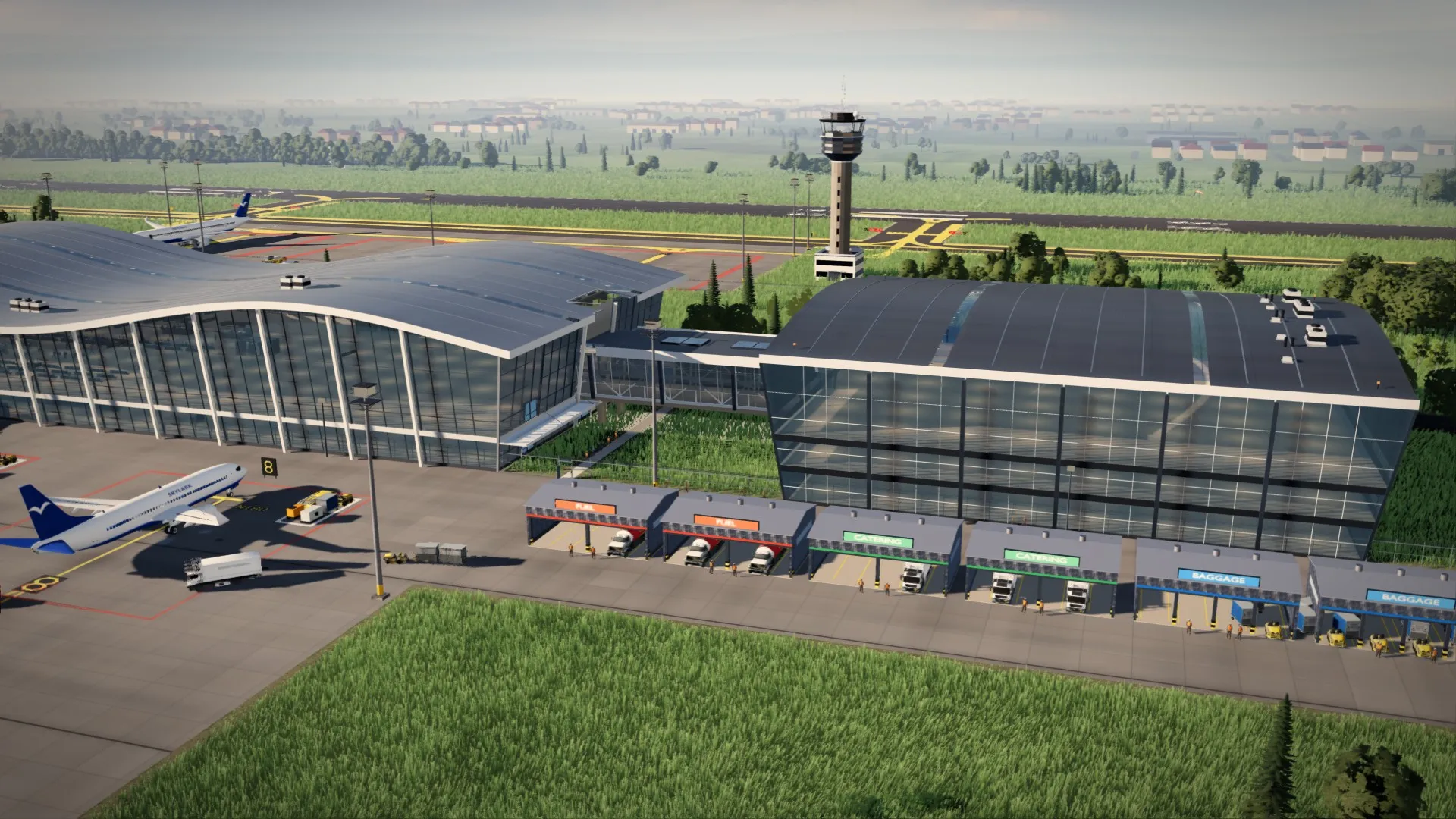
If you’ve ever walked a terminal and thought “I’d have put the gates over there”, that’s the whole idea of Jetbridge. You draw the terminal yourself, decide where the piers go and how far people walk, and then the passengers arrive and tell you whether you were right. Long walks, missed flights and quiet shops are all yours to fix. (Want to try other games first? Here are the airport design games, compared.)
Frequently asked questions
What are the main types of airport terminal layout?
The FAA lists four basic layouts. Linear (planes along one long building), pier (fingers reaching out from a main hall), satellite (separate gate buildings linked by tunnel, bridge or train) and transporter or remote (planes parked away from the building, with buses). Most large airports combine them, which planners call a hybrid.
What is a pier terminal?
A pier, or finger, terminal has long concourses reaching out from the main building, with aircraft parked on one or both sides of each. It fits many gates into little space, but walks get longer and arriving and departing passengers share the same corridors.
What is a satellite terminal?
A satellite is a gate building standing on its own on the airfield, reached by an underground walkway, a bridge or an automated train. Atlanta, Denver and Heathrow Terminal 5 use them. Tampa opened one of the first, with automated people movers, in 1971.
Which terminal layout has the shortest walk?
A small linear terminal, where you walk straight from the kerb to the gate. As terminals grow, IATA's guidance is to keep unaided walks to about 300 metres and add moving walkways beyond that; past roughly 650 metres, airports switch to trains or buses.
Why are some airport gates so far away?
Because every gate needs room for a plane, and the building can only offer so much wall. Piers and satellites add gates by spreading them out, so the more gates an airport has, the further the average walk.
Which airports use satellite terminals?
The FAA names Atlanta, Denver, Miami, Orlando, Pittsburgh, Seattle, Tampa and Washington Dulles as airports with airside concourses reached by automated people movers. In Europe, Heathrow Terminal 5 and Munich Terminal 2 both have satellites.
What is a hybrid terminal?
A terminal that mixes layouts, for example a linear building with piers and a few remote stands served by bus. The FAA notes that many existing and planned terminals use a hybrid, because airports grow in stages.
Can you design your own airport terminal layout in a game?
Yes. In airport building games like Airport CEO and SimAirport you lay out the terminal from above, and in Jetbridge, coming to Steam, you draw the building in 3D and decide where its piers go. Here are the airport games worth playing.
Sources
Prices, release dates and review counts were checked on Nov 27, 2026. They change, and we update this page when they do.
- AC 150/5360-13A, Airport Terminal Planning, Federal Aviation Administration
- Enhancing Airport Access with Emerging Mobility, chapter 13, National Academies of Sciences, Engineering, and Medicine
- Passenger terminal design, IATA
- The evolution of Washington Dulles International Airport, Metropolitan Washington Airports Authority
- Tampa International Airport: 50 years, Tampa International Airport
- Terminal 5, Heathrow Airport, Rogers Stirk Harbour + Partners
- Satellite building has been in successful operation for ten years, Munich Airport
- MCI opens its new terminal, Aviation Pros

I fly into a lot of airports. Most of them make me late, and I take it personally. I like a stand that's free when I land, a jet bridge that reaches the door first time, and good coffee. I don't like taxiing for twenty minutes to a remote stand and watching my passengers get on a bus.