Jet Bridge, Stairs or Bus: Why Some Flights Don't Get a Jet Bridge
Some flights don't get a jet bridge because the airport has more flights than bridged gates, because the plane is too small for one, or because the airline would rather not pay for it. Stairs at two doors can also be faster. Airbus's own chart puts an A320 turnaround at 22 minutes with stairs at both ends, against 44 with one bridge and full servicing.
Why no jet bridge: the short answer
- Not enough gates: Remote stands are the cheap way to add capacity when a terminal is full.
- Cheaper for the airline: Heathrow knocks £5.40 off every passenger's charge on a remote stand.
- Faster with stairs: Two doors beat one bridge, which is why Ryanair prefers stairs.
- Small planes: Many turboprops and regional jets can't use a standard bridge.
- The words: Contact stand (bridge), remote stand (bus), walk-out stand (walk and stairs).
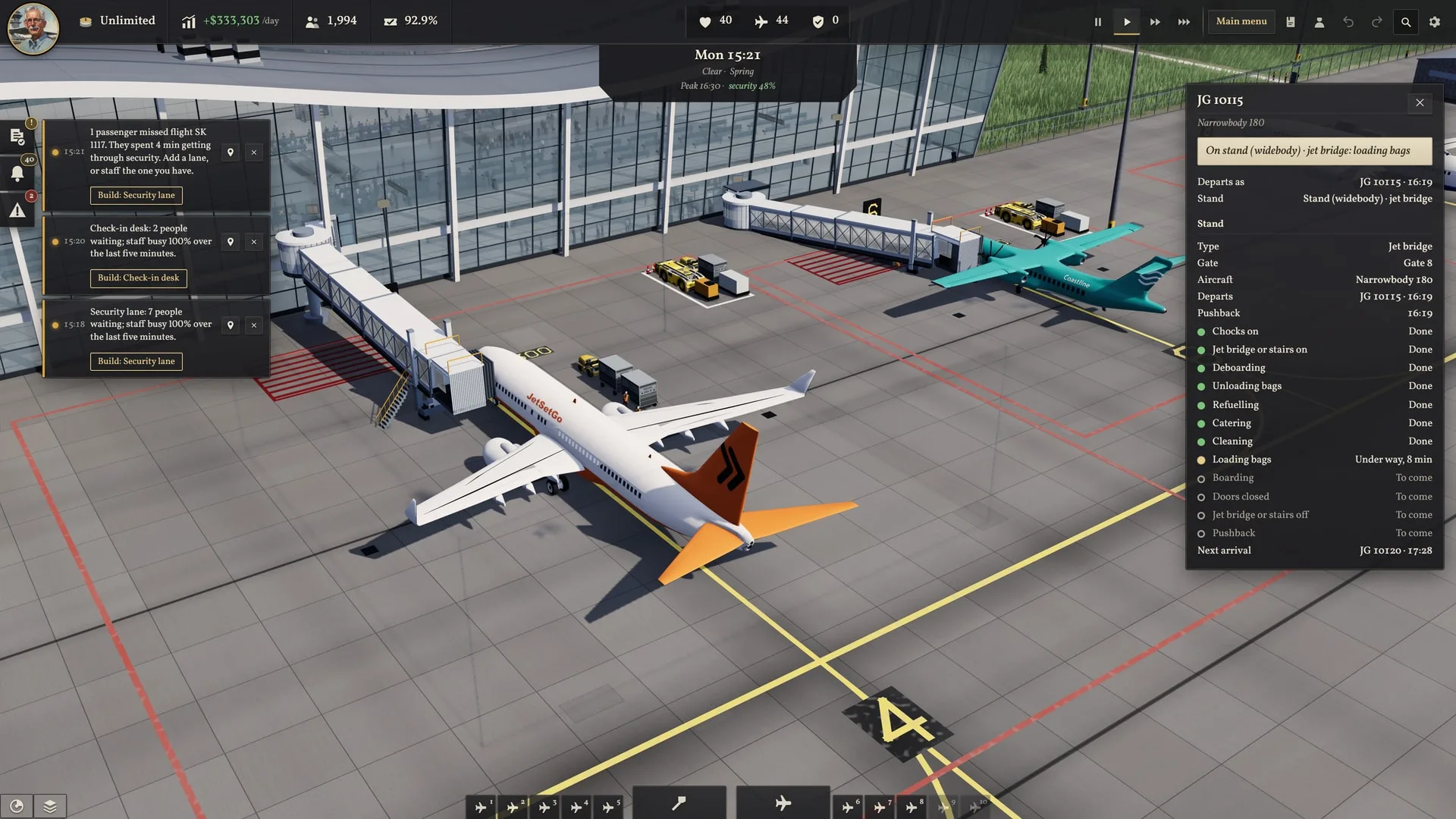
You land, you taxi past three empty jet bridges, and you park in a far corner of the apron next to a bus. Then a hundred and eighty people walk down the stairs into the rain, squeeze onto the bus, and wait while it waits for the last one.
I’ve been the pilot on that flight more times than I’d like. Here’s why it happens, with the real numbers.
Contact, remote and walk-out stands
Short answer
A contact stand is right at the terminal: you walk onto the plane through a jet bridge. A remote stand is out on the apron: a bus takes you to the plane and you climb the stairs. A walk-out stand is near the building but has no bridge: you walk across the apron to the stairs.
Americans tend to say gate for all of these; the FAA calls them contact gates, remote gates (or hardstands) and ground-loaded gates. Europeans say stand for the place the plane parks and gate for the door you leave the terminal by. Heathrow’s rules talk about “off-pier coaching”, which is airport for “you’re getting the bus”.
The jet bridge itself is officially a passenger boarding bridge, or PBB. “Jetway” is a brand: it’s a US trademark, first used in November 1959 and still live today, now owned by Oshkosh AeroTech. Atlanta, San Francisco and New York all claim to have had the first one, all in 1959.
Not enough gates at the terminal
Short answer
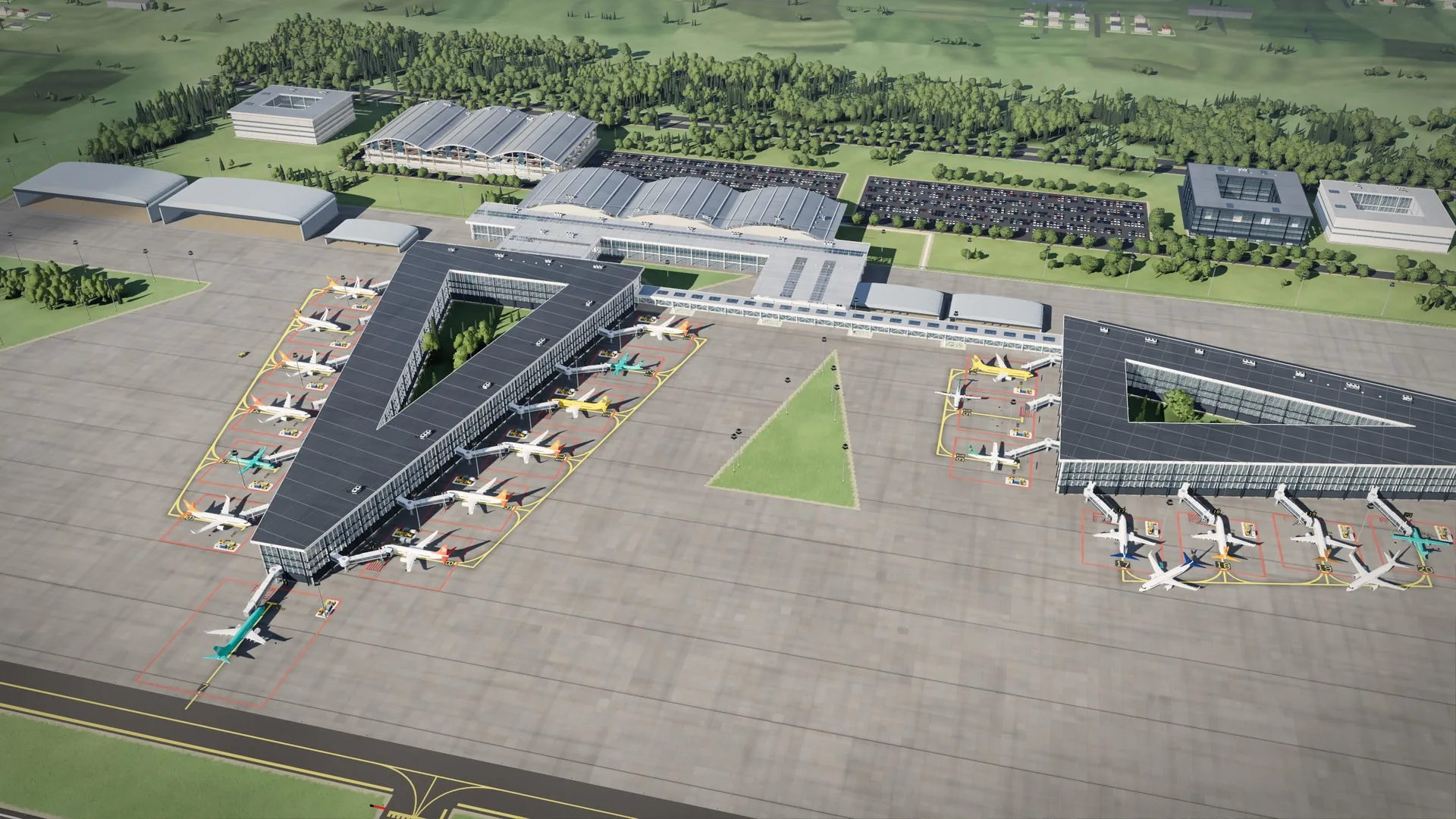
The most common reason is simple: at the busy hour there are more planes than bridged gates. A terminal only has so much wall, and a remote stand is the cheapest way to park one more plane.
The FAA’s terminal planning manual describes remote stands as “a low cost alternative to constructing additional concourse infrastructure”, often used “where passenger demand exceeds terminal capacity”. You can pave a stand in a field; you can’t stretch a terminal overnight.
That’s also why airports grow piers and satellites (the terminal layouts, explained), and why the same flight can get a bridge one day and a bus the next. Stands are allocated each day by size, airline and time, and if your plane arrives at 8 a.m. with everybody else’s, someone gets the bus.
Remote stands are cheaper for airlines
Short answer
Airports often charge less when the plane parks away from the terminal. At Heathrow in 2025, an airline gets £5.40 off the charge for every passenger on a flight using a stand designated remote.
Heathrow’s published charges for 2025 give that £5.40 per passenger rebate, and they let aircraft park free for longer on remote stands: an extra 210 minutes for a narrowbody, on top of the 30 minutes every stand gets. That’s real money for an airline flying full planes.
Across Europe the difference is smaller than you’d think. A 2025 study for the Dutch government compared 13 European and Gulf airports and found a turnaround at a bridged gate cost about 5% more on average than one on the apron. Some airports build the difference into parking or landing charges; some, like Istanbul, charge a separate fee for using the bridge.
Ryanair is the clearest about it. Its 2025 annual report says the airline chooses, “when practicable, less expensive gate locations as well as outdoor boarding stairs, rather than jetways, which are more expensive and operationally less efficient to use”.
Stairs at both doors are faster
Short answer
With stairs, passengers can board and leave through the front and back doors at the same time. A jet bridge usually serves one door. On a short turnaround, that halves the slowest part of the job.
Airbus publishes turnaround charts for airport planners, and the A320’s tells the story:
| A320 turnaround (Airbus planning chart) | Doors used | Time |
|---|---|---|
| Full service: 150 passengers, refuel, catering, cleaning, bags | One jet bridge at the front left door | 44 minutes |
| Quick turn: 180 passengers, no refuel | Stairs at the front and rear left doors | 22 minutes |
The two aren’t quite like for like (the quick turn skips refuelling), but the slowest part of both is the passengers getting off and on, and two doors move them twice as fast as one. Boeing’s chart for the 737-8 shows about 41 minutes for a full turnaround with the bridge, and notes that “passenger loading bridges or portable passenger stairs could be used”.
That’s how a low-cost airline turns a plane around in 25 minutes, which Ryanair says is a big part of why it runs on time.
Some planes are too small
Short answer
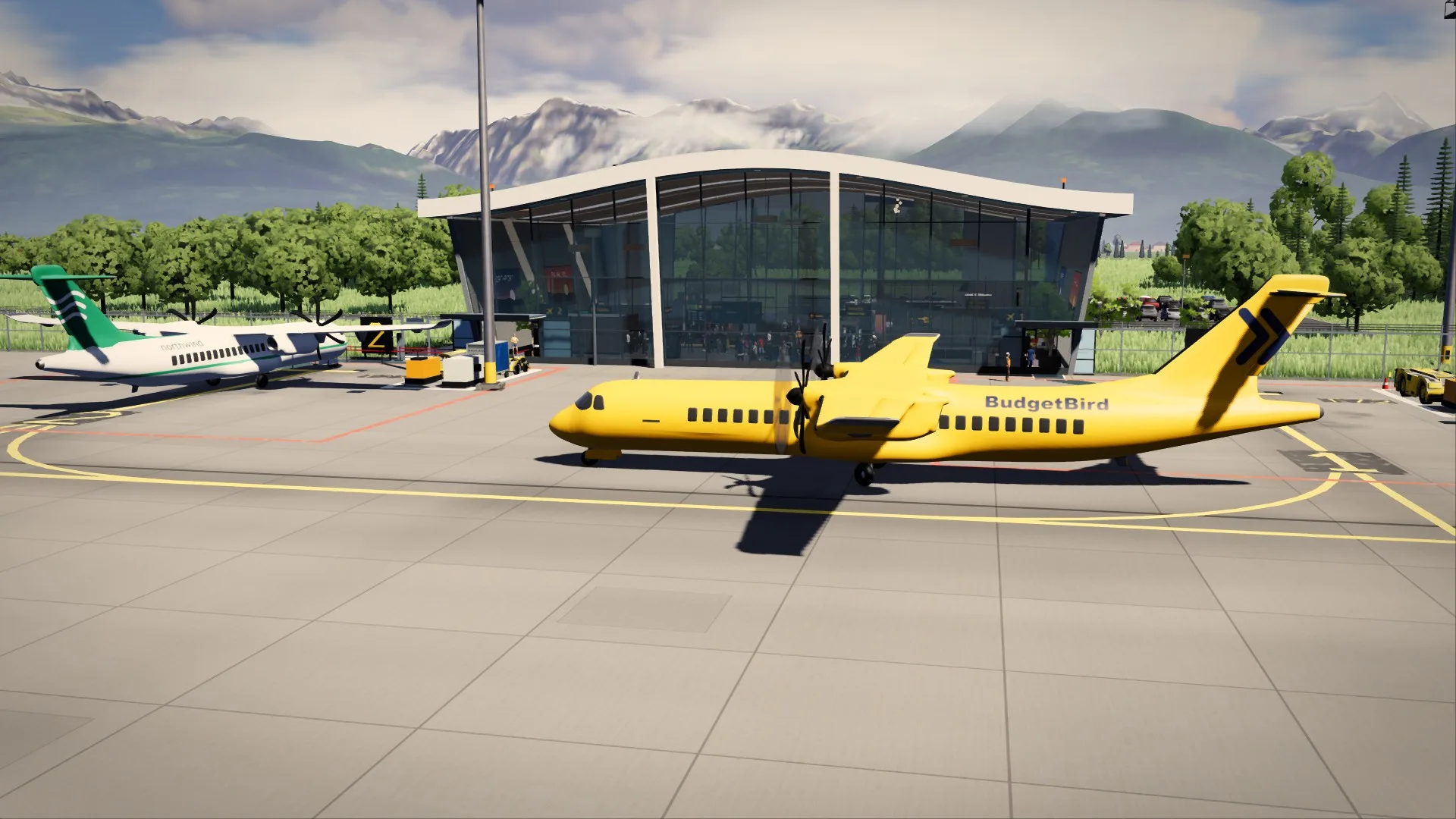
Many turboprops and regional jets have doors too low for a standard jet bridge, so they use stairs, often built into the door. The FAA calls these “ground-loaded” gates, typical for aircraft “incompatible with traditional PBBs”.
At Schiphol, the Dutch study found that an Embraer 190 regional jet is handled on the apron 89% of the time, while an Airbus A330 widebody gets a bridge 97% of the time. Big planes get bridges (an A380 often gets three, one to its upper deck); small ones get stairs.
Why the US has more jet bridges than Europe
The FAA says it plainly: contact gates are “the most common type of gate in the United States”, and remote stands are “common in European and South American airports” but “uncommon in the United States”. European airports charge less for remote stands, have more low-cost airlines that want them, and often more aircraft than wall at the peak.
The US has tried the other extreme too. When Washington Dulles opened in 1962, there were no gates at all: “mobile lounges”, 54-foot rooms on wheels for up to 102 passengers, drove from the terminal right to the aircraft. Growth turned them into shuttles to the new midfield concourses, and a train replaced most of them in 2010. A few are still in use today.
What it costs to build a jet bridge
Short answer
Recent US examples cost $1.5 to $2 million per bridge. Cincinnati replaced 28 bridges in 2025 at that price, and Savannah approved about $8.5 million for five.
That’s for the bridge alone (here’s how a jet bridge works, and more of what airports paid). Add the terminal wall it hangs off, the ground power and preconditioned air at the gate, and maintenance, and it’s clear why a painted rectangle on the apron is tempting.
Bridges have to meet rules too: a slope of no more than 1 in 12 for wheelchair access, an auto-leveller that follows the plane as it rises and sinks during loading, and a canopy that seals around the door to keep the weather out. On a remote stand, wheelchair users board with a high-lift vehicle, an ambulift, that raises them to the aircraft door.
How this works in Jetbridge
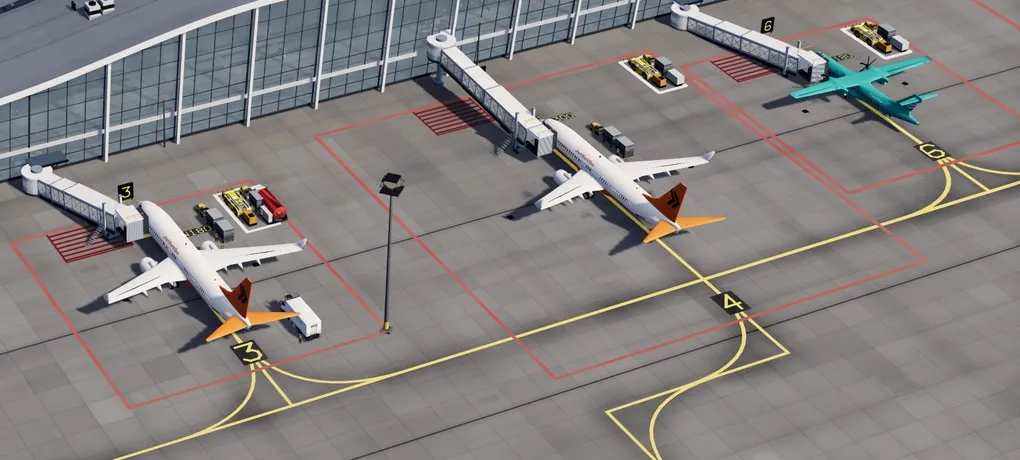
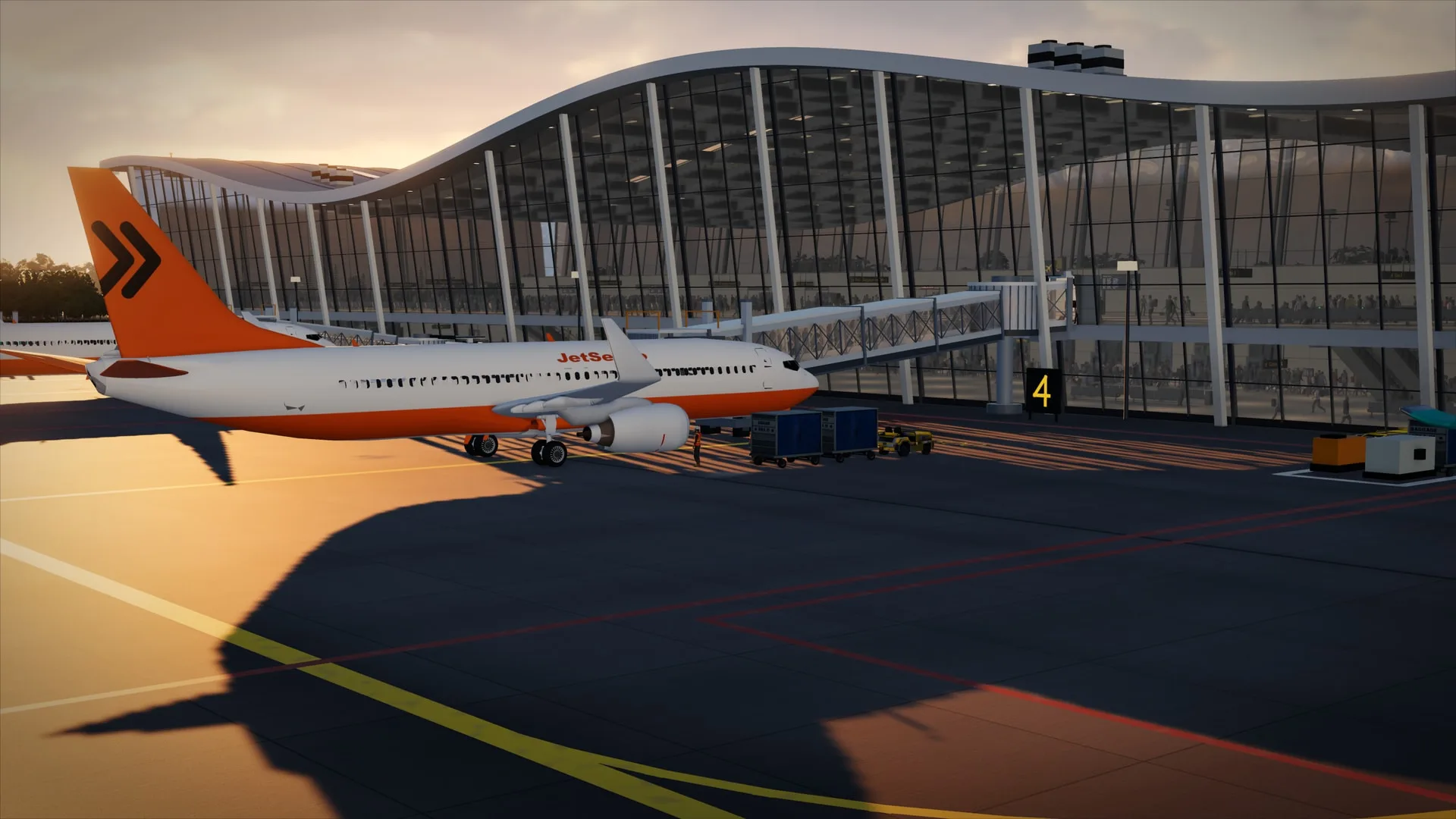
Since our game is literally named after the thing, you face exactly this choice in Jetbridge. Build a stand against the terminal and you get a jet bridge. Build it out on the apron and it’s cheap and quick, but your passengers take the bus.
The trade-offs are the real ones too. Remote stands go anywhere, but the bus takes time, and the last passenger on the bus is always the one who makes you late. Jet bridges cost more and need room on the terminal. Which one you build is up to you. That’s the game.
Frequently asked questions
Why do some flights board by bus?
Because the aircraft is parked on a remote stand, away from the terminal. Airports use remote stands when they have more flights than bridged gates at busy times, and some airlines choose them because they cost less. The FAA calls them "a low cost alternative to constructing additional concourse infrastructure".
Why don't all gates have jet bridges?
A bridge costs real money (US airports have recently paid $1.5 to $2 million per bridge), it only fits certain aircraft, and a terminal only has so much wall. Remote and walk-out stands are cheaper to build and can take any size of plane.
Is boarding by stairs faster than a jet bridge?
It can be, when both the front and rear doors are used. Airbus's planning chart shows an A320 turnaround of 22 minutes with stairs at two doors and no refuelling, against 44 minutes for a full service through one bridge.
Do low-cost airlines avoid jet bridges to save money?
Yes, some do on purpose. Ryanair's 2025 annual report says it chooses "less expensive gate locations as well as outdoor boarding stairs, rather than jetways, which are more expensive and operationally less efficient to use".
Why are there more jet bridges in the US than in Europe?
In the US, contact gates are "the most common type of gate", according to the FAA, which describes remote stands as "common in European and South American airports" and "uncommon in the United States". European airports also charge less for remote stands, which encourages airlines to use them.
How much does a jet bridge cost?
Recent US examples are about $1.5 to $2 million per bridge. Cincinnati replaced 28 bridges at $1.5 to 2 million each in 2025, and Savannah approved about $8.5 million for five.
What is the difference between a gate and a stand?
The stand is where the aircraft parks; the gate is where passengers leave the terminal to reach it. At a contact stand they're joined by a jet bridge. At a remote stand the gate leads to a bus.
Is Jetway the same as a jet bridge?
Jetway is a trademark, registered in the US in 1960 and still live, for a brand of passenger boarding bridge now made by Oshkosh AeroTech. The generic names are jet bridge, airbridge, or passenger boarding bridge (PBB).
How do wheelchair users board at a remote stand?
With a lift. The FAA's boarding equipment rules cover lifts that carry passengers "from the airport apron to the door of the aircraft"; in Europe these high-lift vehicles are usually called ambulifts.
Sources
Prices, release dates and review counts were checked on Nov 11, 2026. They change, and we update this page when they do.
- AC 150/5360-13A, Airport Terminal Planning, Federal Aviation Administration
- AC 150/5220-21C, Aircraft Boarding Equipment, Federal Aviation Administration
- A320 Aircraft Characteristics: Airport and Maintenance Planning (July 2026), Airbus
- 737 MAX Airplane Characteristics for Airport Planning, Rev K, Boeing
- Heathrow Airport Limited, Conditions of Use from 1 January 2025, Heathrow Airport
- Benchmark luchthavengelden en overheidsheffingen 2013, 2018, 2023 en 2024, SEO Amsterdam Economics, for the Dutch Ministry of Infrastructure
- Ryanair Annual Report 2025, Ryanair Holdings
- Cincinnati Int'l improves boarding efficiency in Concourse B, Airport Improvement
- Savannah/Hilton Head International Airport leadership take next step in $85M expansion project, Savannah CEO
- JETWAY trademark, US registration 703033, USPTO
- Different people say they installed the first jet bridge, Aviation Pros
- The evolution of Washington Dulles International Airport, Metropolitan Washington Airports Authority
- Jetway passenger boarding bridges, Oshkosh AeroTech

I fly into a lot of airports. Most of them make me late, and I take it personally. I like a stand that's free when I land, a jet bridge that reaches the door first time, and good coffee. I don't like taxiing for twenty minutes to a remote stand and watching my passengers get on a bus.