What Is a Jet Bridge? How It Works, Who Drives It and What It Costs
A jet bridge is the movable tunnel that connects the terminal to the aircraft door, so you can board without going outside. Its proper name is a passenger boarding bridge; "Jetway" is a brand. A trained operator drives it to the door, and a new one costs a US airport around $1.5 to $2 million.
What is a jet bridge? The short answer
- How it works: A tunnel that pivots at the terminal, telescopes out and drives on wheels.
- Who drives it: A trained operator with a joystick. Some airports now let it dock itself.
- What it costs: About $1.5 to $2 million each, from recent US airport purchases.
- Who invented it: Several airlines claim it. The first ones opened in 1958 and 1959.
- When it goes wrong: Bridges do hit planes now and then. The wind is one reason.
I’ve walked down a few thousand jet bridges. Most passengers walk down them too, staring at their phone, without once wondering how a tunnel finds the door of a plane it has never met. It’s a fair question, and the answer is more interesting than you’d think.
What is a jet bridge?
Short answer
A jet bridge is the movable, enclosed walkway between the terminal and the aircraft door. It swings out from the building, stretches to the right length, rises or falls to the door and seals against the plane, so you can board without stepping outside.
Its official name is a passenger boarding bridge. In the UK it’s an airbridge; in Australia, an aerobridge. Plenty of people call it a jetway, which started out as a brand name and still is one: Oshkosh AeroTech sells “Jetway® Passenger Boarding Bridges” today, having bought the business from JBT in 2023. Like Hoover, the name became the word.
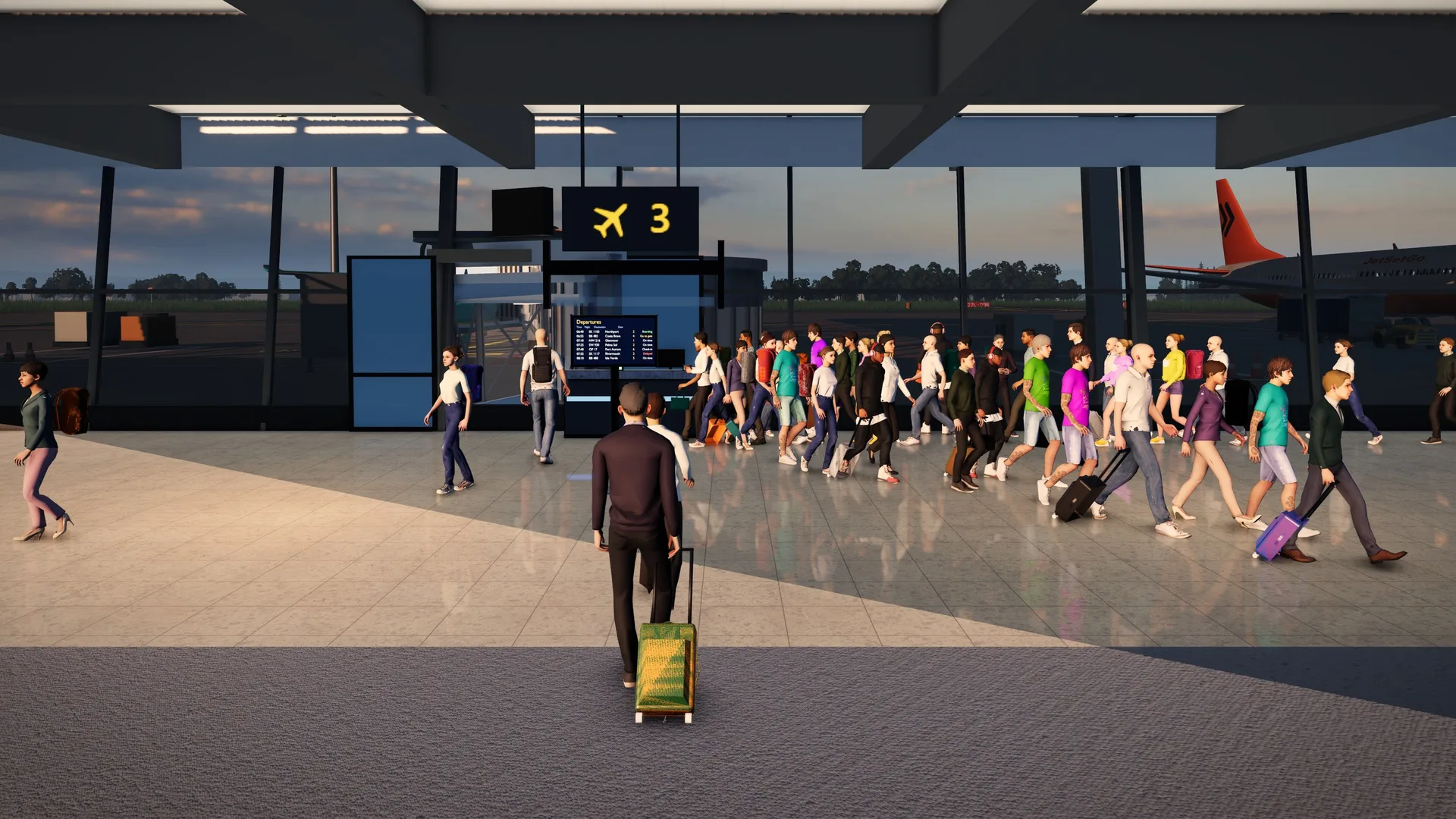
How does a jet bridge work?
Short answer
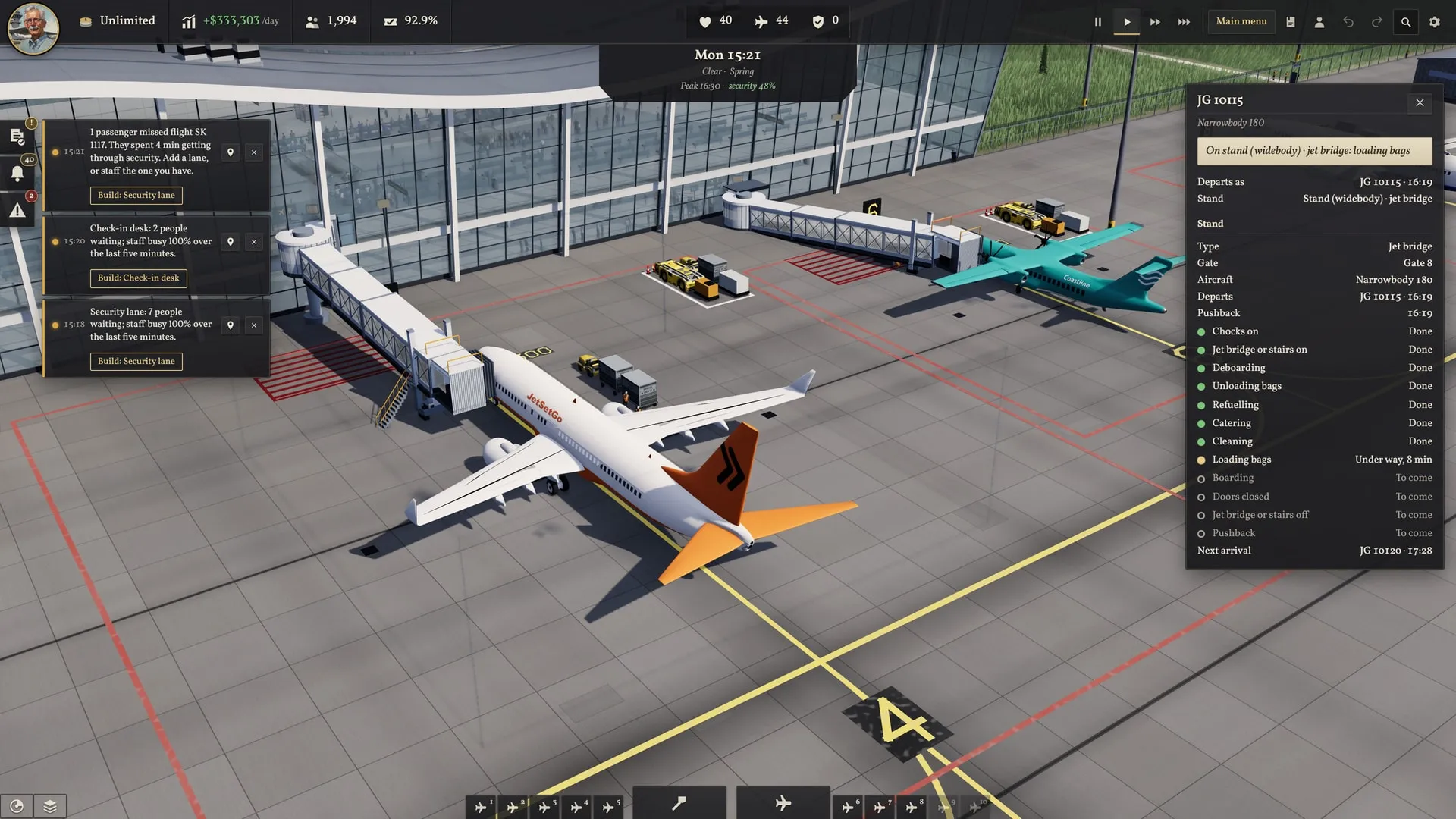
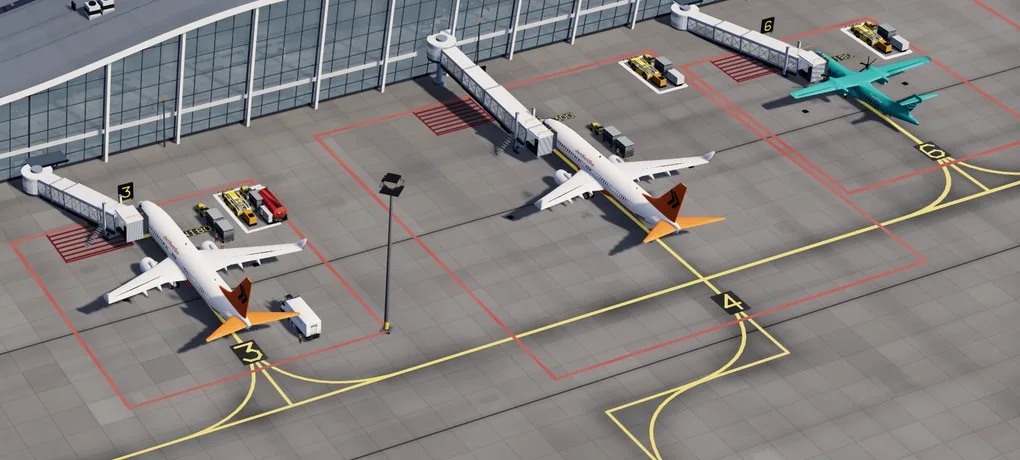
It pivots on a round room at the terminal called the rotunda, telescopes out in two or three tunnels, and drives on a set of wheels near the far end. The cab at the tip turns to face the door, a canopy closes the gap, and an automatic leveller keeps the floor in line with the door.
From the terminal outwards, a typical jet bridge has:
- The rotunda, the drum-shaped room at the building. It’s the fixed hinge the whole bridge swings around.
- Two or three tunnels that slide into each other like a telescope, so one bridge can reach planes parked at slightly different spots.
- The drive column, a pair of legs with wheels underneath. It lifts the tunnels up and down and drives them across the apron.
- The cab at the very end, which swivels to line up with the door. That’s where the operator stands.
- The canopy, a folding hood like the bellows of an old camera, which comes down onto the fuselage to keep out the wind and rain.
The clever part is the autolevel. A plane isn’t fixed in place at the gate: it sinks as people and bags come aboard and rises as they leave. A small wheel or sensor rests against the fuselage and raises or lowers the cab to follow it, “maintaining the cab at the same level as the door”, in the words of a 1970s patent. Without it you’d board up a step and leave down one.
Who drives the jet bridge?
Short answer
A trained operator, usually from the airline or its ground-handling company, standing in the cab with a joystick. A few airports now have bridges that dock themselves or are driven from a control room.
Driving one is a real skill. One handling company’s advert for a jet bridge operator at New York JFK lists about four to six weeks of training, and airport groups recommend a refresher every year. When Cincinnati put in 28 new bridges, its team said: “We put on more training sessions than we ever dreamed we would have to.”
The operator brings the bridge out slowly, lines the cab up with the door, lowers the canopy and switches on the autolevel before anyone opens the door. Then they stay with it.
Machines are starting to do it themselves:
- Amsterdam Schiphol opened what KLM called the “world’s first fully automatic” jet bridge in 2019. Cameras find the door, and the bridge “can connect up within one minute”, with an employee supervising.
- Madrid-Barajas announced in 2025 that it would “remotely operate a total of 129 Passenger Boarding Bridges” from “three dedicated control rooms”.
- In the US, Oshkosh sells JetDock, an automatic docking system that can be fitted to older bridges.
How much does a jet bridge cost?
Short answer
Around $1.5 to $2 million per bridge, from recent US airport purchases. That’s the bridge alone, before the terminal wall it hangs off.
Airports buy them with public money, so the prices are on the record. These are recent ones:
| Airport | When | What | Price |
|---|---|---|---|
| Cincinnati/Northern Kentucky (CVG) | 2023–24 | 28 bridges, replacing ones nearly 30 years old | $1.5 to $2 million each |
| Savannah/Hilton Head (SAV) | 2025 | 5 bridges, bought and installed | Nearly $8.5 million (about $1.7 million each) |
| Columbia Regional, Missouri (COU) | 2025 | 1 bridge | $1.8 million, 90% paid by the FAA |
| Destin-Fort Walton Beach (VPS) | 2023 | 3 bridges | A $4 million contract |
| London Stansted (STN) | 2022 | 1 double bridge for the largest jets | £1.5 million |
| San Francisco (SFO), American Airlines | 1959 | The first system | “More than $100,000” |
In the US, much of the bill is often paid by the federal government: the FAA covered 90% at Columbia and $14 million of Cincinnati’s project.
And a bridge isn’t just a bridge. Many carry two more machines underneath: a ground power unit, which plugs electricity into the parked plane, and a preconditioned air unit, which pumps heated or cooled air into the cabin through a fat hose. Without them the plane runs its own small engine in the tail, the APU, which burns about 28 gallons of jet fuel an hour, according to the US Electric Power Research Institute.
How long does a jet bridge last?
Twenty years or more. Oshkosh promises “20+ years of life”, Destin-Fort Walton Beach replaced its bridges at the end of what its director called a roughly 20-year lifespan, and the ones Cincinnati took out were nearly 30. They don’t work hard for most of that time, either: one study by the Electric Power Research Institute found bridges are on the move for an average of about five minutes an hour.
The kinds of jet bridge
Most jet bridges you’ll ever walk down are apron drive bridges: the telescoping, wheel-driven kind above. But there are others:
- Nose loaders, short fixed bridges for planes that park right up against the building.
- Double and triple bridges, two or three at one gate for the biggest jets. Stansted’s double bridge from 2022 can reach the upper deck of an A380, and Emirates was the first airline to use it.
- Over-wing bridges, which reach over the wing to a door further back. Some early wide-body gates at Schiphol had them.
- Regional bridges, lower ones built for turboprops and small jets, which sit too close to the ground for a standard bridge.
And for a while there were rear-door bridges too. American’s first system at San Francisco had one, but it saved only a few minutes and didn’t last, which is a big reason why you nearly always board through the front door.
Who invented the jet bridge?
Short answer
Nobody can agree. The first ones went into service in 1958 and 1959 in the US, and at least three airlines claim to have been first.
United trialled its “Aero-Gangplank” at Chicago O’Hare in 1958. In the summer of 1959, American Airlines opened its “jetwalks” at San Francisco; TIME reported that they let a 707 board in “three to five minutes” in any weather. And Delta installed its own bridge at Atlanta “in the nick of time at 5 a.m., July 22, 1959”, as the trade magazine Aviation Pros tells it. It was built by Pacific Iron and Steel and called the Jetway.
It’s the Jetway name that won. The bridges, meanwhile, spread around the world. The biggest maker today, China’s CIMC-TianDa, said in 2020 that it had about 40% of the world market.
Can a jet bridge damage a plane?
Short answer
Yes, though it’s rare. A bridge driven into a fuselage, a canopy caught on a door or a bridge moved by the wind can all dent a plane, and a dented plane stays on the ground until it’s been checked.
The best-known case is from Dubuque, Iowa, in April 2011. The wind blew a jet bridge into a parked Embraer regional jet. The airport had switched off the bridge’s brakes over the winter because they kept icing up, so the emergency stop did nothing. The US National Transportation Safety Board put it down to the airport’s “improper decision to deactivate the jet bridge braking system”.
It’s why operators stay with the bridge while it’s docked, and why the autolevel matters: a plane that rises while the bridge stays put is a plane with a bent door.
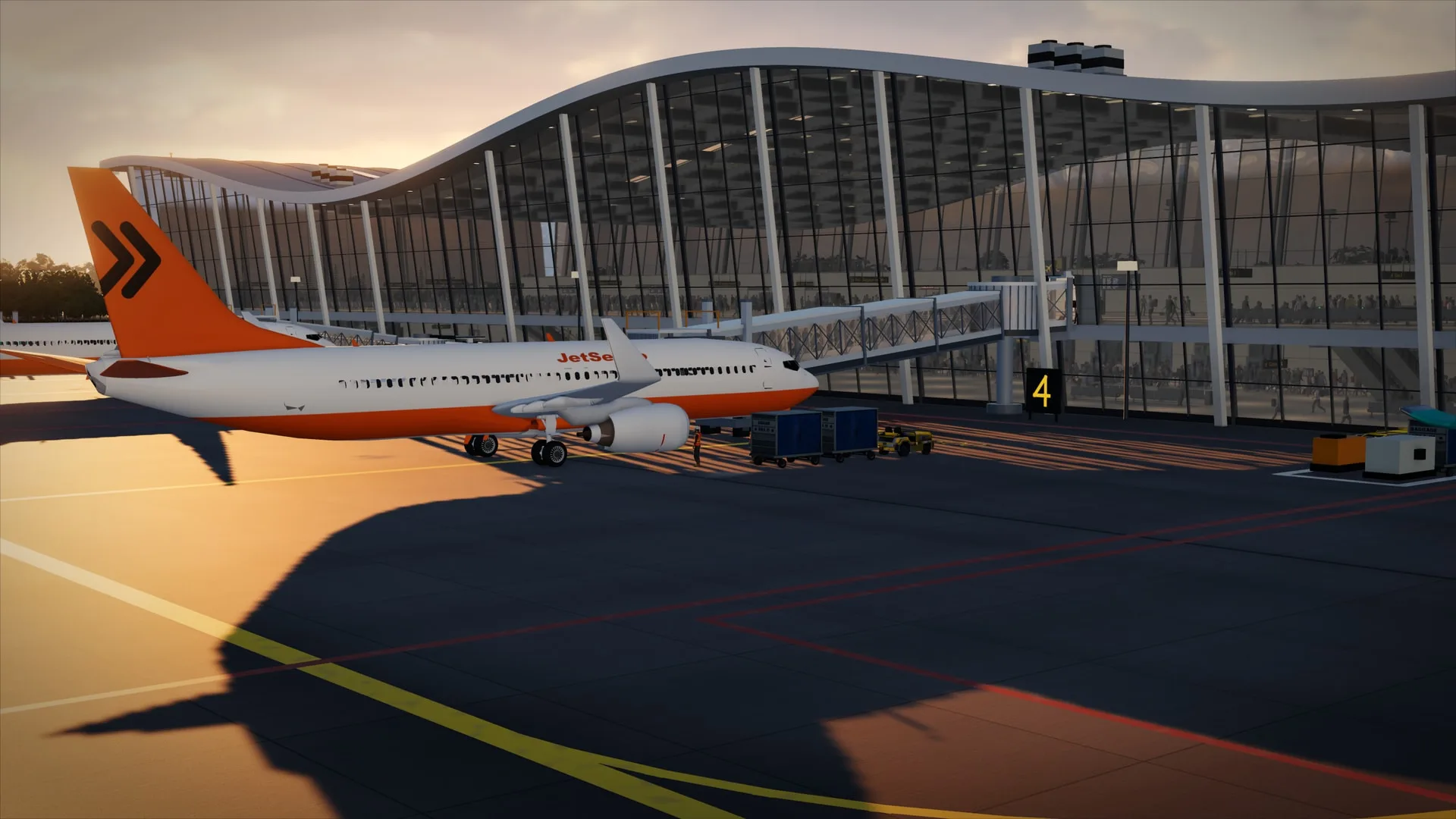
Why some flights don’t get a jet bridge
Not every flight docks at one. A terminal only has so much wall, some planes are too small for a standard bridge, and stairs at two doors can turn a plane around faster. Low-cost airlines often prefer them for exactly that reason. Here’s why some flights board by bus or stairs instead.
Jet bridges in Jetbridge
We named our game after them because they’re where an airport and a plane meet, and getting that meeting right is the whole game. In Jetbridge, you decide which stands get a jet bridge and which get stairs and a bus ride. Put the bridges in the right places and your passengers stroll aboard. Put them in the wrong ones and you’ll be watching a queue of buses at the morning rush, wondering why you saved the money.
Frequently asked questions
What is a jet bridge called?
Its official name is a passenger boarding bridge. In the UK and Australia it's usually an airbridge or aerobridge, and many people call it a jetway, which began as a brand name and is still a registered trademark of Oshkosh AeroTech.
How does a jet bridge attach to the plane?
It doesn't lock on. The operator drives the end of the bridge, the cab, up to the door, lowers a canopy that closes the gap around the fuselage, and a small automatic leveller keeps the cab floor in line with the door as the plane rises and sinks while people and bags go on and off.
How much does a jet bridge cost?
Recent US purchases come to about $1.5 to $2 million per bridge. Cincinnati replaced 28 in 2023 and 2024 at $1.5 to $2 million each, and Savannah approved nearly $8.5 million for five in 2025. In the UK, Stansted paid £1.5 million for a double bridge in 2022.
Who operates the jet bridge?
Airline or ground-handling staff trained to drive that bridge. At New York JFK, one handling company's job advert lists about four to six weeks of training. A few airports, like Amsterdam and Madrid, now have bridges that dock themselves or are driven from a control room.
How long does a jet bridge last?
Around 20 years, often more. Oshkosh AeroTech promises "20+ years of life", and the bridges Cincinnati replaced in 2023 were nearly 30 years old.
Who invented the jet bridge?
Nobody agrees. United trialled one at Chicago O'Hare in 1958, and in 1959 American at San Francisco and Delta at Atlanta both opened theirs. Delta's version, built by Pacific Iron and Steel, was called the Jetway, and the name stuck.
Can a jet bridge damage a plane?
Yes. In 2011 at Dubuque, Iowa, the wind blew a jet bridge into a parked regional jet, because its brakes had been switched off over winter when they kept icing up. Bridge strikes are rare, but operators are trained for exactly this.
Why don't all flights use a jet bridge?
Because the terminal only has so much wall, some planes are too small for one, and stairs at two doors can be faster and cheaper. Here's the full answer.
Is Jetway a brand?
Yes. Jetway is a brand of passenger boarding bridge made by Oshkosh AeroTech, which bought the business from JBT in 2023. Like Hoover or Jacuzzi, the name became the word.
Sources
Prices, release dates and review counts were checked on Nov 28, 2026. They change, and we update this page when they do.
- Jetway® Passenger Boarding Bridges, Oshkosh AeroTech
- JetDock automatic docking system, Oshkosh AeroTech
- Oshkosh Corporation acquires AeroTech, Oshkosh AeroTech
- Aviation: Jet-Age Boarding (August 10, 1959), TIME
- Different people say they installed the first jet bridge, Aviation Pros
- Jet bridges: everything you need to know, AeroCorner
- Cincinnati Intl improves boarding efficiency and other ground handling systems in Concourse B, Airport Improvement
- Savannah/Hilton Head International Airport leadership take next step in $85M expansion project, SavannahCEO
- $1.8 million passenger boarding bridge for COU approved by Columbia's city council, 93.9 The Eagle
- 3 new jet bridges coming to Destin-Fort Walton Beach Airport, Get The Coast
- Double airbridge boosts long-haul capabilities, London Stansted Airport
- KLM customers disembark faster at Schiphol with world's first fully automatic jet bridge, KLM
- TK Elevator transforms Madrid airport into world's first fully remote-operated hub, TK Elevator
- Jet Bridge Operator job posting, New York JFK, dnata
- Airport ground power and preconditioned air (ACRP), National Academies Press
- Electric ground support at airports, EPRI
- NTSB incident CEN11IA270, Dubuque, Iowa, NTSB, via accidents.app
- CIMC-TianDa and the boarding bridge market, China Daily

I fly into a lot of airports. Most of them make me late, and I take it personally. I like a stand that's free when I land, a jet bridge that reaches the door first time, and good coffee. I don't like taxiing for twenty minutes to a remote stand and watching my passengers get on a bus.